
Alastair Campbell, co-host of the political podcast The Rest is Politics, asked in the new episode of Leading—featuring President Irfaan Ali – some important questions about the country’s low-carbon strategy, management of the sovereign wealth fund (including the Norway model), corruption in the wake of the oil boom, and Guyana’s position on the Venezuelan border controversy. The episode is available here: https://alastaircampbell.org/2025/08/148-the-president-of-guyana-the-fastest-growing-economy-in-the-world-irfaan-ali/
Mr. Campbell was, however, largely served polished fairy tales about good governance and effective corruption management – claims that the Natural Resource Fund (NRF) is under strict parliamentary control, and similar assurances. Perhaps because of the acknowledged prior diplomatic briefing by the UK High Commissioner to Guyana, it was a missed opportunity for the usually savvy political strategist to press the President on the questions that matter most to Guyanese citizens.
1. Oil Contract and Resource Management
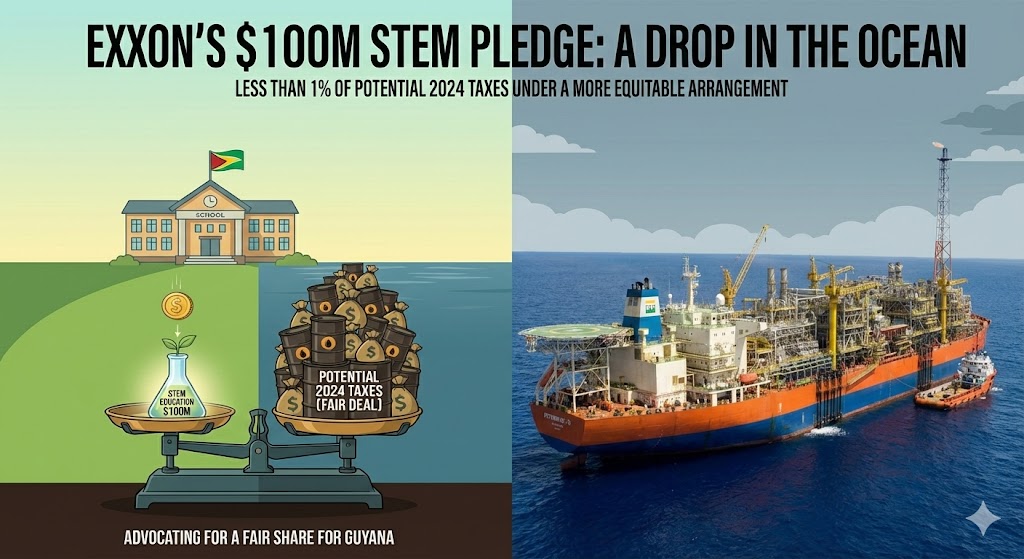
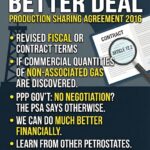
Why hasn’t your government renegotiated the lopsided 2016 oil contract with ExxonMobil and its partners, as your party explicitly promised in the 2020 election manifesto and in public statements – especially given your own acknowledgment before taking office that the deal was “skewed in favour” of ExxonMobil?
Do you believe it is right and fair that Guyana pays the corporate taxes owed by ExxonMobil for the entire life of the contract – a contract hidden from the public until 2017 – despite the PPP/C’s commitment to “maximize returns to the people of Guyana”?
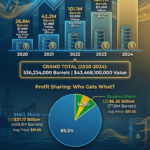
What are the long-term implications for the foreign currency reserves of the Bank of Guyana, given that the nominal corporate taxes attributable to the three oil consortium partners amount to the annual income Guyana receives from the sale of its share of oil plus the royalties it collects? Does the lack of corporate tax payments by the foreign oil companies contribute to the foreign currency shortages Guyana has been experiencing repeatedly in recent years?
Why did your administration pass new oil spill legislation that fails to extend full liability coverage to the parent companies of the local oil company subsidiaries, despite expert advice and international best practice?
Why – despite repeatedly citing Norway’s sovereign wealth fund as the benchmark for Guyana’s NRF – have you not travelled to Norway even once in your five years as President to learn firsthand how the Norwegians have insulated their fund from political interference?
2. Transparency, Oversight, and Governance
Why has your party impeded the operation of parliamentary oversight committees by appointing ministers to them in such numbers that quorum rules – i.e., the minimum number of committee members present for a valid meeting – cannot be met? Why are ministers allowed to sit on oversight committees at all, given that these committees are meant to act as watchdogs over the executive branch?
Why has the ruling party pushed through key legislation, such as the NRF Act 2021 and the Oil Pollution Preven-tion, Preparedness, Response and Respon-sibility Act 2025, without referring the draft bills to parliamentary select committees, and why did your Members of Par-liament vote down all proposed amendments and modifications?
Why hasn’t the Commissioner of Information been investigated for rejecting or stalling public information requests since 2020, contrary to the Access to Information Act?
Why is Silica City – your flagship urban development project – proceeding without parliamentary approval or oversight, in breach of the Fiscal Management and Accountability Act?
How will your government act on the 2024 UN Human Rights Committee
recommendations (see https://docs.un.org/ en/CCPR/C/GUY/CO/3?utm_source=chatgpt.com), given Guy-ana’s obligations under the International Covenant on Civil and Political Rights (ICCPR)?
3. Corruption and Accountability
Why have you not appointed a Presidential Commission of Inquiry into allegations of corruption involving Vice President Bharrat Jagdeo, despite saying “no one is above the law”?
Why are billion-dollar infrastructure contracts going to politically connected individuals and firms with no proven expertise or capacity, despite the Procurement Act’s requirement for competitive bidding?
Why have ordinary Guyanese living below the World Bank 2023 poverty line of USD 6.50/day (GYD 1,355/day) seen only rising living costs and housing shortages, while a small elite reaps vast benefits from the oil boom?
4. Environmental and Indigenous Rights
Why were carbon credits sold without the legal approval of Amerindian communities, in breach of the Amerindian Act 2006 and the principle of Free, Prior, and Informed Consent (FPIC)?
Why has your government sidelined wind power, including the fully financed Hope Wind Project, undermining the Low Carbon Development Strategy 2030’s goal to diversify energy?
Why wasn’t a large 80 MWp solar power park considered at the Wales site of the Gas-to-Energy project – one that could have been operational in less than two years for about USD 50 million, as demonstrated by two recent developments in Germany?
5. Future of Human Capital
How will you stem skilled migration to the US, Canada and the UK, when nepotism and party loyalty often trump merit, undercutting the goal of a “knowledge-based economy”?
How many medical schools can a nation of 800,000 sustain without sacrificing quality? Wouldn’t upgrading the underfunded University of Guyana Medical School make more sense than promising new medical schools in the hinterland, where patient numbers are insufficient to justify their establishment?
Why has the Georgetown Public Hospital, our most important referral institution, been neglected in your hospital infrastructure programme? Wouldn’t a master-planned relocation to a modern campus next to the University of Guyana – integrating training, research, and care – be consistent with your stated commitments?
These are just some of the burning questions that should have been asked. President Ali consistently refuses to hold press conferences and does not respond to questions from NGOs such as the Oil & Gas Governance Network (OGGN) Guyana (www.oggn.org).
OGGN’s eight-week letter campaign (February–April 2025) asked ministers, including the President, for answers on the 2016 Petroleum Contract. None responded. Is this the President’s vision of inclusive, responsible government – or the reality of governance under his rule?
In closing: what is the value of interviews with leaders of the Global South if moderators lack a deep understanding of the country’s politics and rely only on diplomatic briefings? If you cannot separate fairy tales from facts, you do your audience – and your brand – a disservice.
Sincerely,
Andre Brandli, PhD
Ludwig-Maximilians-University Munich Germany