Dear Editor,
According to a BBC press release, https://www.bbc.co.uk/mediacentre/2026/world-questions-guyana, it was announced that on Tuesday, March 10, BBC World Questions will travel to Guyana to debate the nation’s political and economic future. The discussion will focus heavily on Guyana’s vast oil and gas reserves. Panelists will include Dr. Ashni Singh, Minister of Finance, and Ms. Tabitha Sarabo-Halley, Opposition M.P. for the WIN party. OGGN has proposed the following list of questions to be raised during this debate:
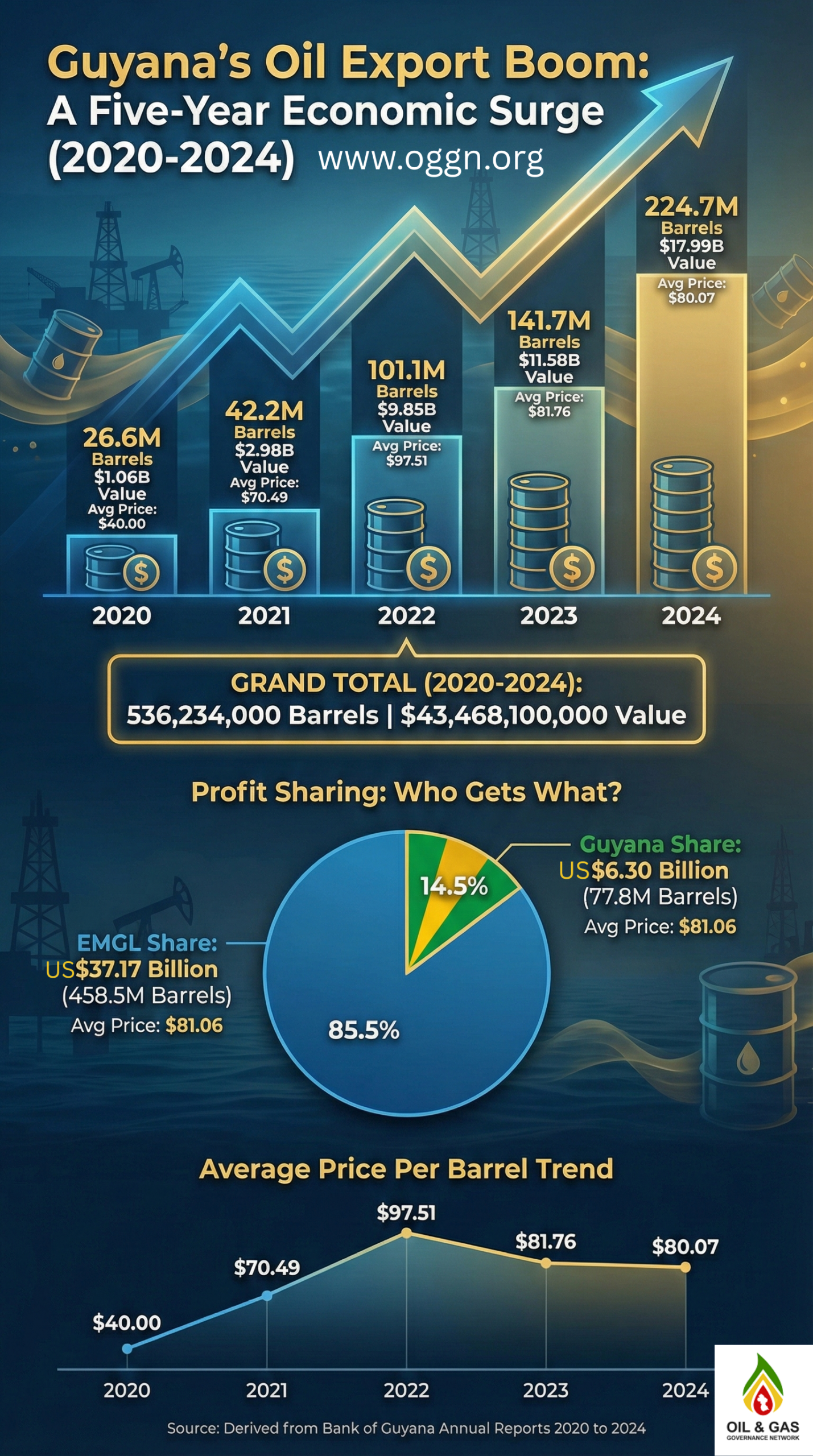
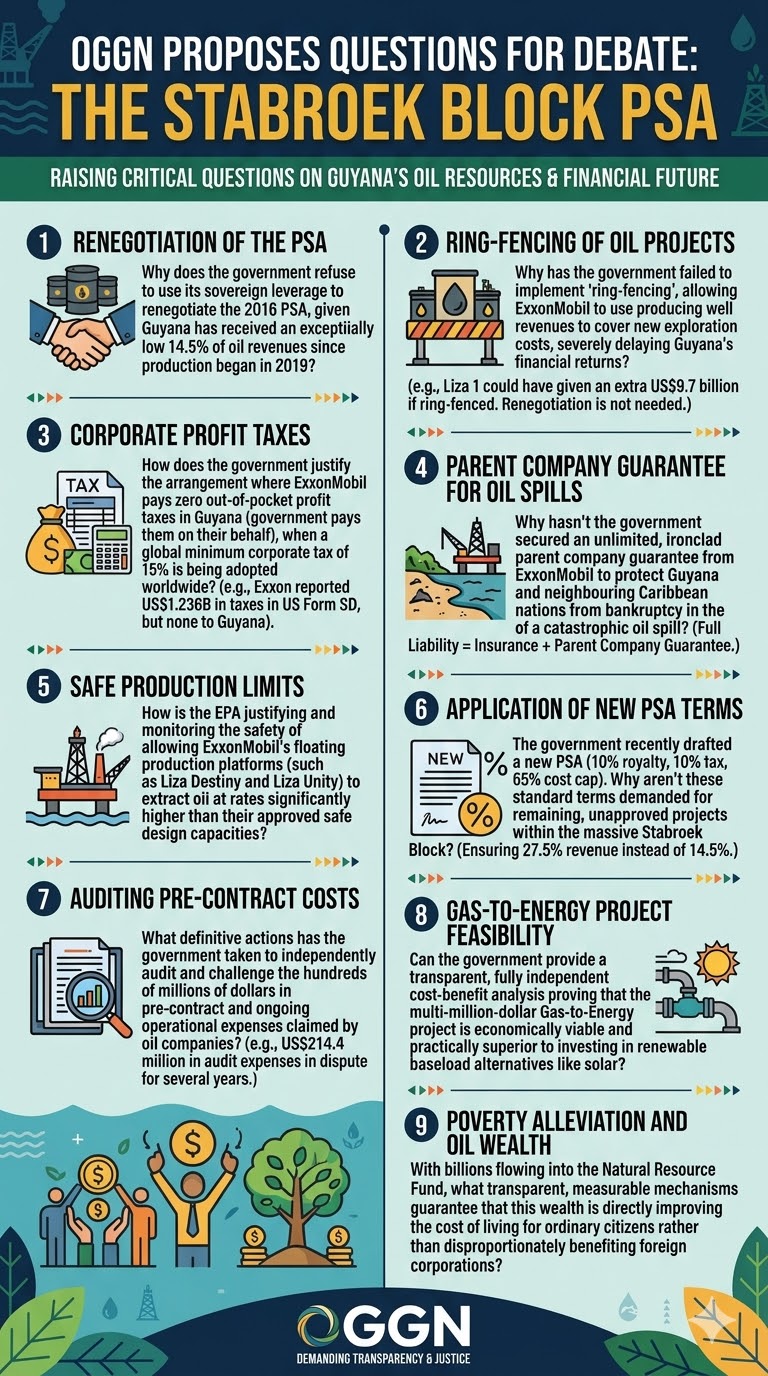
Renegotiation of the Stabroek Block PSA: Why does the government refuse to use its sovereign leverage to renegotiate the 2016 Production Sharing Agreement (PSA) with ExxonMobil, given Guyana has received an exceptionally low 14.5% of oil revenues since oil production began in December 2019.
Ring-Fencing of Oil Projects: Why has the government failed to implement “ring-fencing” provisions on ExxonMobil’s projects, which currently allows the company to use revenues from producing oil wells to cover the costs of new exploration, thereby severely delaying Guyana’s financial returns? OGGN recently computed that just from Liza 1 Guyana could have received an extra US$9.7 billion if it was ring-fenced. The oil contract does not need to be renegotiated for ring-fencing to be employed.
Corporate Profit Taxes: How does the government justify the arrangement where ExxonMobil pays zero out-of-pocket profit taxes in Guyana—because the government pays it on their behalf out of its own share—especially when a global minimum corporate tax of 15% is being adopted worldwide? OGGN recently cited that in 2024, ExxonMobil reported US$1.236 billion in taxes paid in Guyana in its Specialized Disclosure Report (Form SD) filed with the United States Securities and Exchange Commission. However, ExxonMobil paid no such taxes on it oil profits to the Government of Guyana.
Parent Company Guarantee for Oil Spills: Why hasn’t the government secured an unlimited, ironclad parent company guarantee from ExxonMobil to ensure that Guyana and neighbouring Caribbean nations would not be left bankrupt in the event of a catastrophic offshore oil spill? Dr. Vincent Adams has repeatedly outlined, the standard formula for protecting a nation is: Full Liability Coverage = Insurance + Parent Company Guarantee. Without an unlimited Parent Company Guarantee, Guyana and the broader Caribbean face utter financial bankruptcy if a major spill exceeds the local subsidiary’s limited insurance cap.
Safe Production Limits: How is the Environmental Protection Agency (EPA) justifying and monitoring the safety of allowing ExxonMobil’s floating production platforms (such as Liza Destiny and Liza Unity) to extract oil at rates significantly higher than their approved safe design capacities?
Application of New PSA Terms: The government recently drafted a new PSA for future oil blocks featuring a 10% royalty, 10% corporate tax, and a 65% cost recovery cap. Why aren’t these standard terms being demanded for the remaining, unapproved projects within the massive Stabroek Block? These new terms would ensure Guyana receives at least 27.5% from oil revenues instead of the current 14.5%. Of course, ring-fencing per project should always be applied.
Auditing Pre-Contract Costs: What definitive actions has the government taken to independently audit and challenge the hundreds of millions of dollars in pre-contract and ongoing operational expenses claimed by oil companies? For example, there are US$214.4 million in audit expenses being in dispute for several years.
Gas-to-Energy Project Feasibility: Can the government provide a transparent, fully independent cost-benefit analysis proving that the multi-million-dollar Gas-to-Energy project is economically viable and practically superior to investing directly in renewable baseload alternatives like solar?
Poverty Alleviation and Oil Wealth: With billions of dollars in oil revenue flowing into the Natural Resource Fund and a significant portion of the Guyanese population still living below the poverty line, what transparent, measurable mechanisms guarantee that this wealth is directly improving the cost of living for ordinary citizens rather than disproportionately benefiting foreign corporations?
Sincerely,
Darsh Khusial
Kenrick Hunte
On behalf of OGGN (www.oggn.org)
a 501(c)3 organization.