


By Anthony Paul, Senior Energy and Strategy Advisor and former Director of Geology and Geophysics at the Trinidad and Tobago Ministry of Energy.
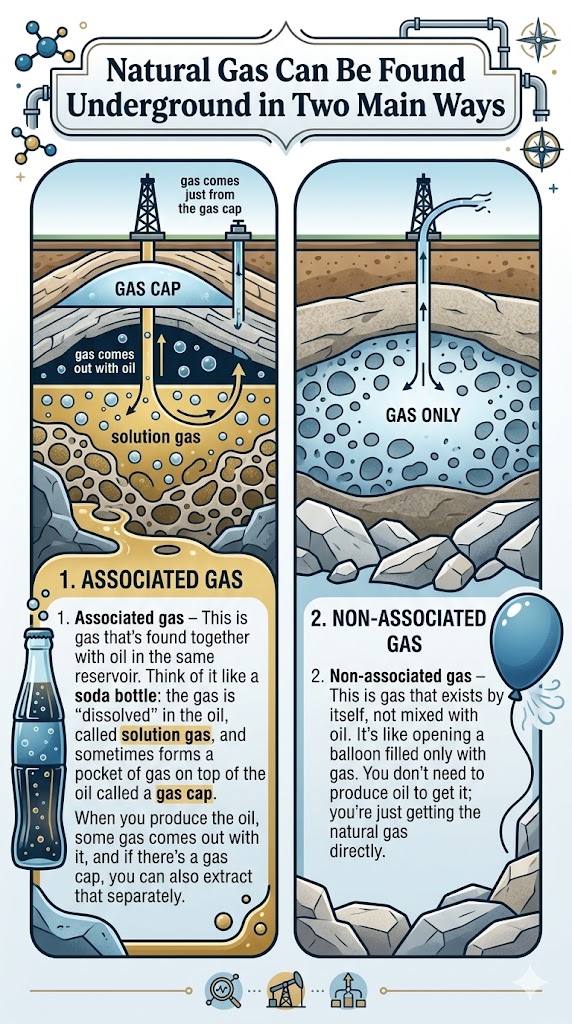
Natural Gas Can Be Found Underground in Two Main Ways
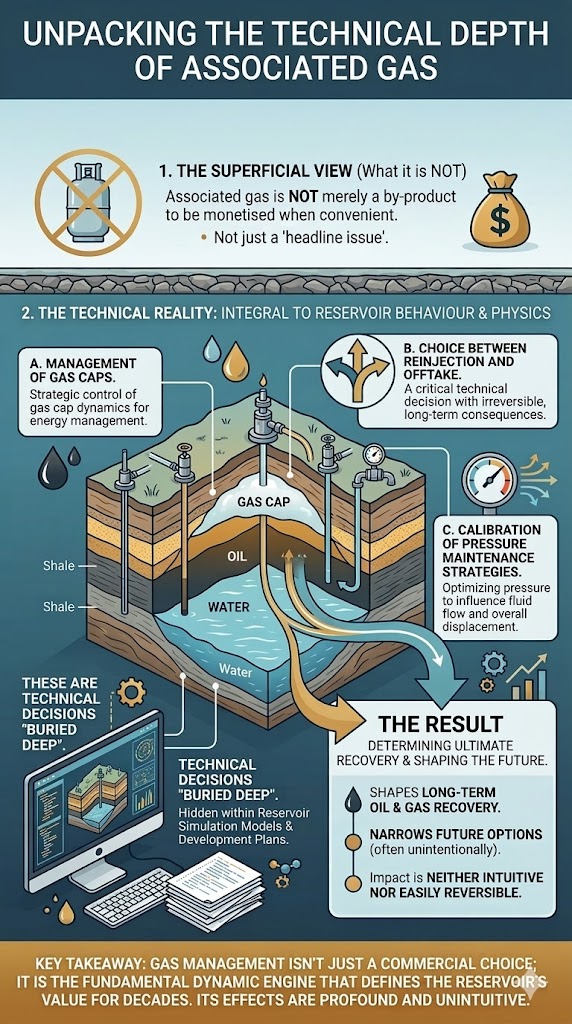
- Associated gas – This is gas that’s found together with oil in the same reservoir. Think of it like a soda bottle: the gas is “dissolved” in the oil, called solution gas, and sometimes forms a pocket of gas on top of the oil called a gas cap. When you produce the oil, some gas comes out with it, and if there’s a gas cap, you can also extract that separately.
- Non-associated gas – This is gas that exists by itself, not mixed with oil. It’s like opening a balloon filled only with gas. You don’t need to produce oil to get it; you’re just getting the natural gas directly.
Why Gas Re-Injection Becomes a Growing Challenge
When oil is produced offshore, natural gas often comes up with it. Much of this gas is compressed and injected back underground to maintain reservoir pressure.
But over time, each production cycle tends to bring up more gas relative to oil.
If there is no pipeline to take the gas away, the system must compress and re-inject larger and larger volumes, increasing operating costs and sometimes limiting how fast oil can be produced.
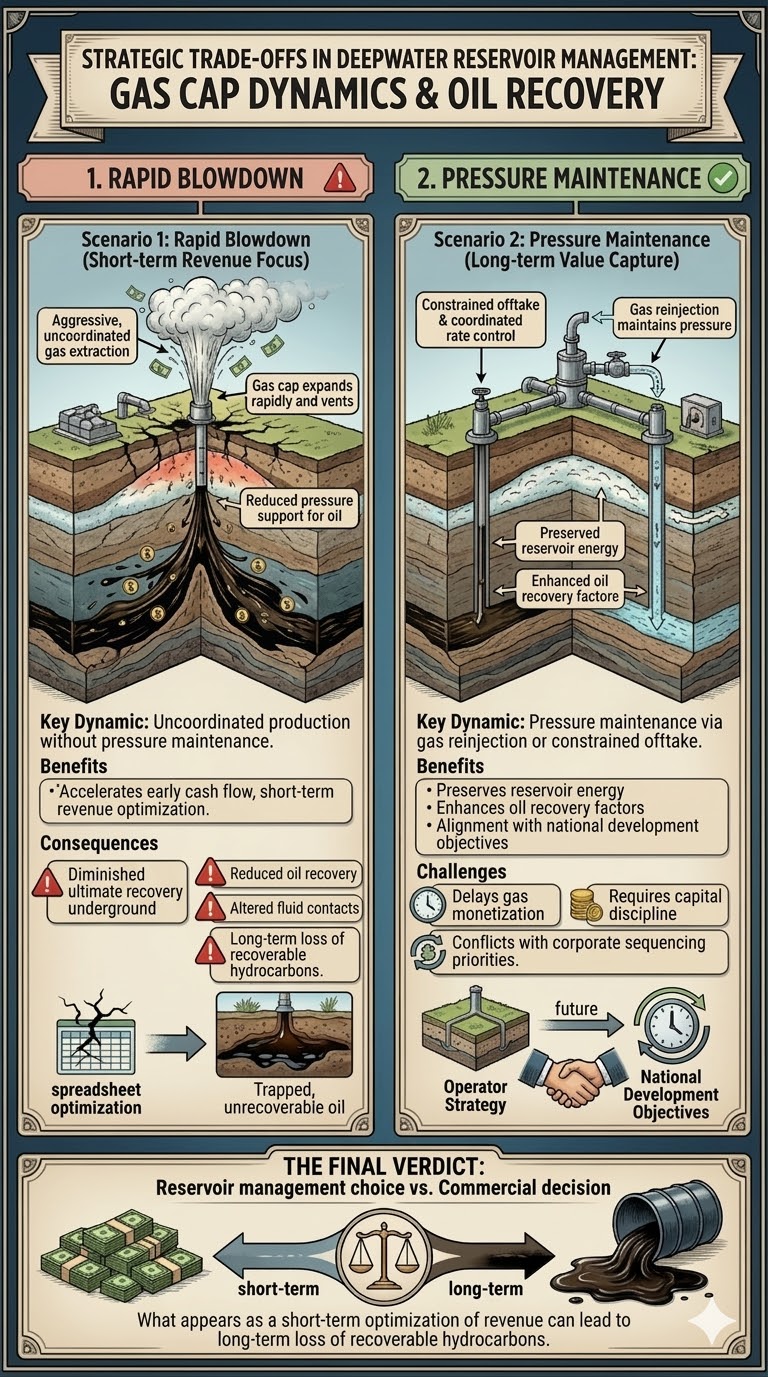
Why the “Gas Cap” Matters
In many oil reservoirs, natural gas sits on top of the oil underground. This is called a gas cap.
That gas helps maintain pressure in the reservoir, pushing oil toward the wells so it can be produced.
If gas is removed too quickly, the pressure underground can fall, which may reduce how much oil can ultimately be recovered.
Gas decisions are therefore not just commercial decisions. They are also reservoir management decisions that can affect the total value of the resource.
Why Gas Production Cannot Always Start Immediately
Many people ask: If the gas is there, why not sell it right away?
The answer is two-fold.
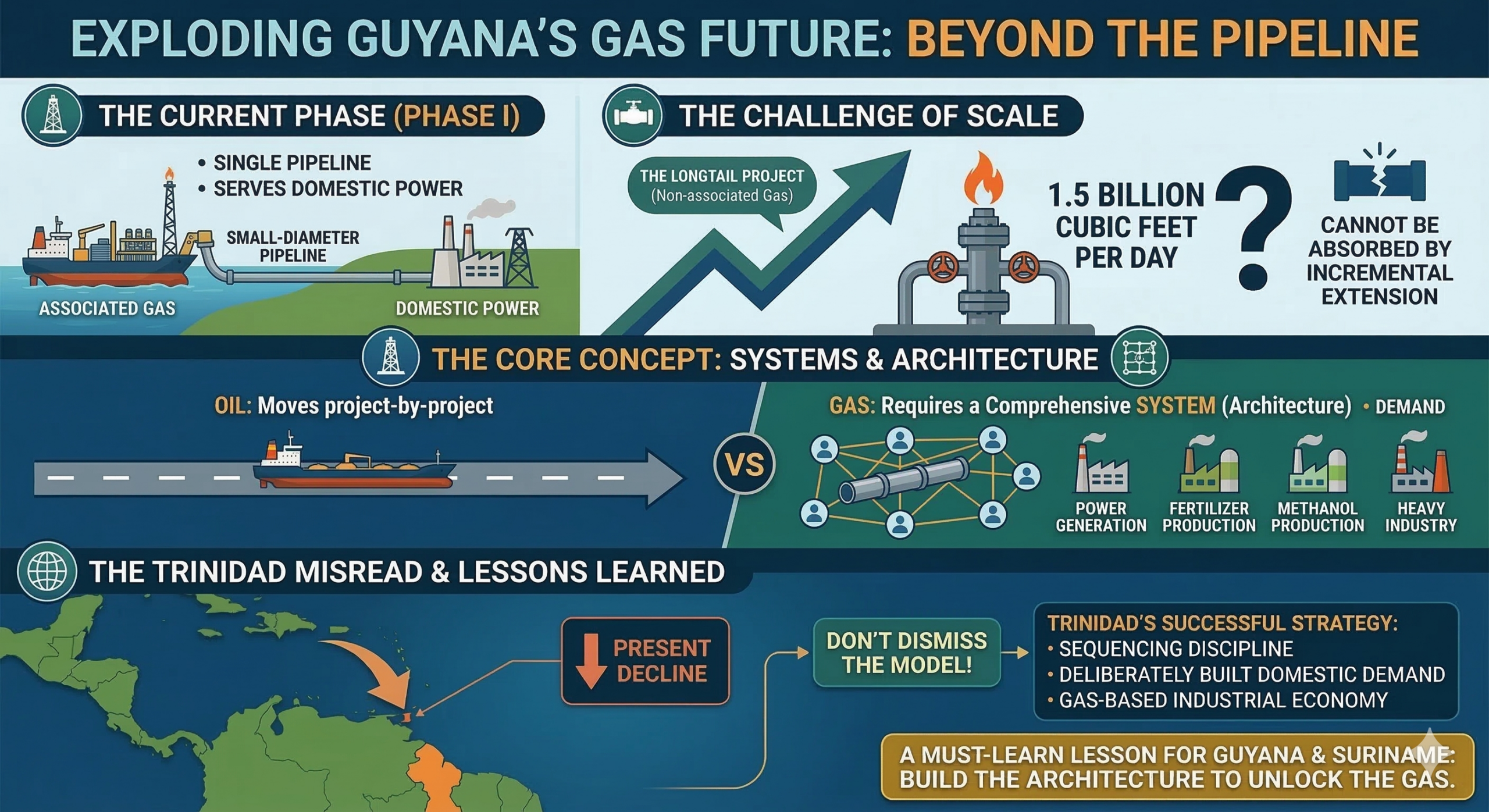
First, there may not be a way to get it to a user (no pipeline, for instance) or there may not be a user to take it (no power plant, for instance)
Second, underground reservoirs behave according to physics, not politics.
In some reservoirs, producing gas too early can cause liquids such as condensate to become trapped underground, reducing the total amount that can be recovered.
For this reason, engineers sometimes delay gas production while managing pressure carefully to maximise overall recovery.
What may appear to be delay from the outside may actually be careful reservoir management.
Why Oil Companies Think in Global Terms
Large energy companies do not make decisions about one country in isolation.
International business partnerships
A company operating in Guyana may also be developing projects in other parts of the world at the same time, and each project competes internally for investment.
This means the timing of developments can depend on factors such as:
- global gas prices
• competing projects elsewhere
• available investment capital
• technical priorities
Understanding this helps explain why development timelines do not always move as quickly as governments or citizens might expect.
Why Technical Understanding Matters for Policy
Gas development is not just about pipelines or power plants.
Every decision — how fast to produce gas, when to export it, or how much infrastructure to build — can affect:
- future oil recovery
• government revenues
• electricity costs
• the long-term value of Guyana’s resources
Some consequences may only become visible many years later.
Governments, not multinational companies, should manage their country’s portfolio and so must be prepared, to ensure the best outcome for their citizens. That is why sound policy must be based on a clear understanding of the technical behaviour of oil and gas reservoirs.