In Canada, it is estimated that the average family pays 42% of their income in taxes (see https://tinyurl.com/bdapxsrt). Corporations also pay taxes which range across the provinces, but in large provinces like Ontario, the corporate rate works out to about 23.5%. People in Canada receive significant benefits from taxes, such as unemployment insurance, subsidized dental care for those earning less than US$65,000 annually (or CAN$90,000), and universal health insurance, including fully covered heart and other major surgeries. In a country that is 46 times the size of Guyana, Canadian roads are generally well maintained, with sidewalks (‘pavements’) and cross walks for pedestrians.
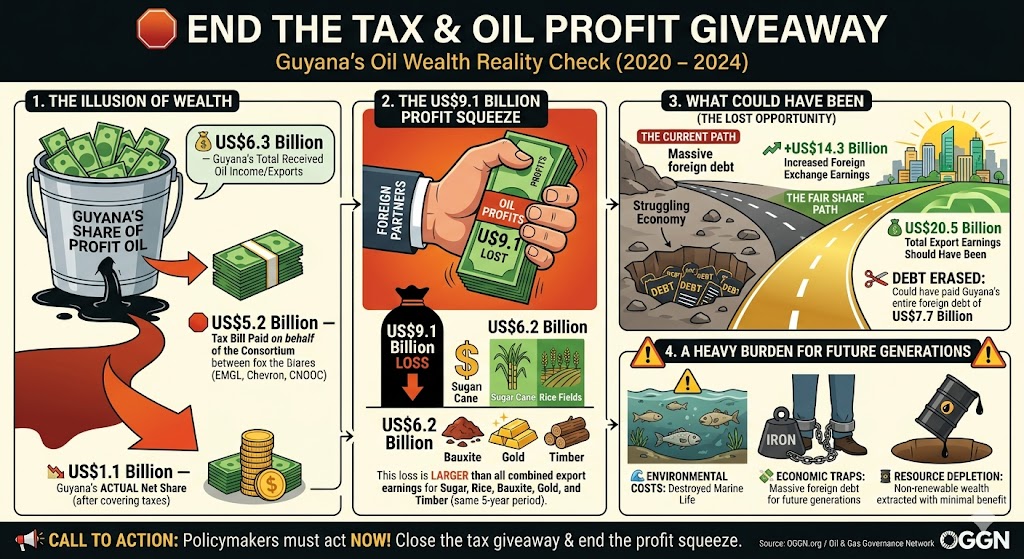
From 2020 to 2024, using the oil companies’ financial statements, it is estimated the three partners of the Stabroek Block Consortium did not pay US$5.2 billion in taxes. Guyana is plagued by blackouts, which is ironic given that we are pumping today 900,000 barrels of oil a day. To put that in context, the typical Guyanese uses 4.4 kWh per day. A barrel of oil is equivalent to 1,700 kWh. Thus, we are producing more than 385 times the energy we need per day but we can’t keep the lights on.
We don’t have to wait for the constantly delayed gas-to-energy project to be the sole solution to the blackout issue. Solar power can significantly reduce the frequency of blackouts the typical Guyanese experiences. If we assume a solar installation, to power major appliances such as a fridge and air conditioner, in Guyana costs US$10,000, then for the approximately 250,000 households living in Guyana, that US$5.2 billion in uncollected taxes could have paid for solar installations, which would cost around US$2.5 billion. Plus, we would have money left over to significantly increase pay for our teachers and nurses. Instead, the government prefers to put Guyana in debt to build a gas-to-energy solution to the blackout problem.
We don’t need to tax our citizens at 42% to provide first-class services. We just need to have the oil companies pay their taxes, as must all other companies in Guyana at 25 per cent for non-commercial and 40 per cent for commercial activities in Guyana.
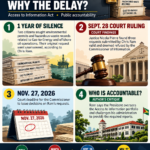
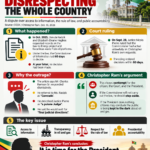
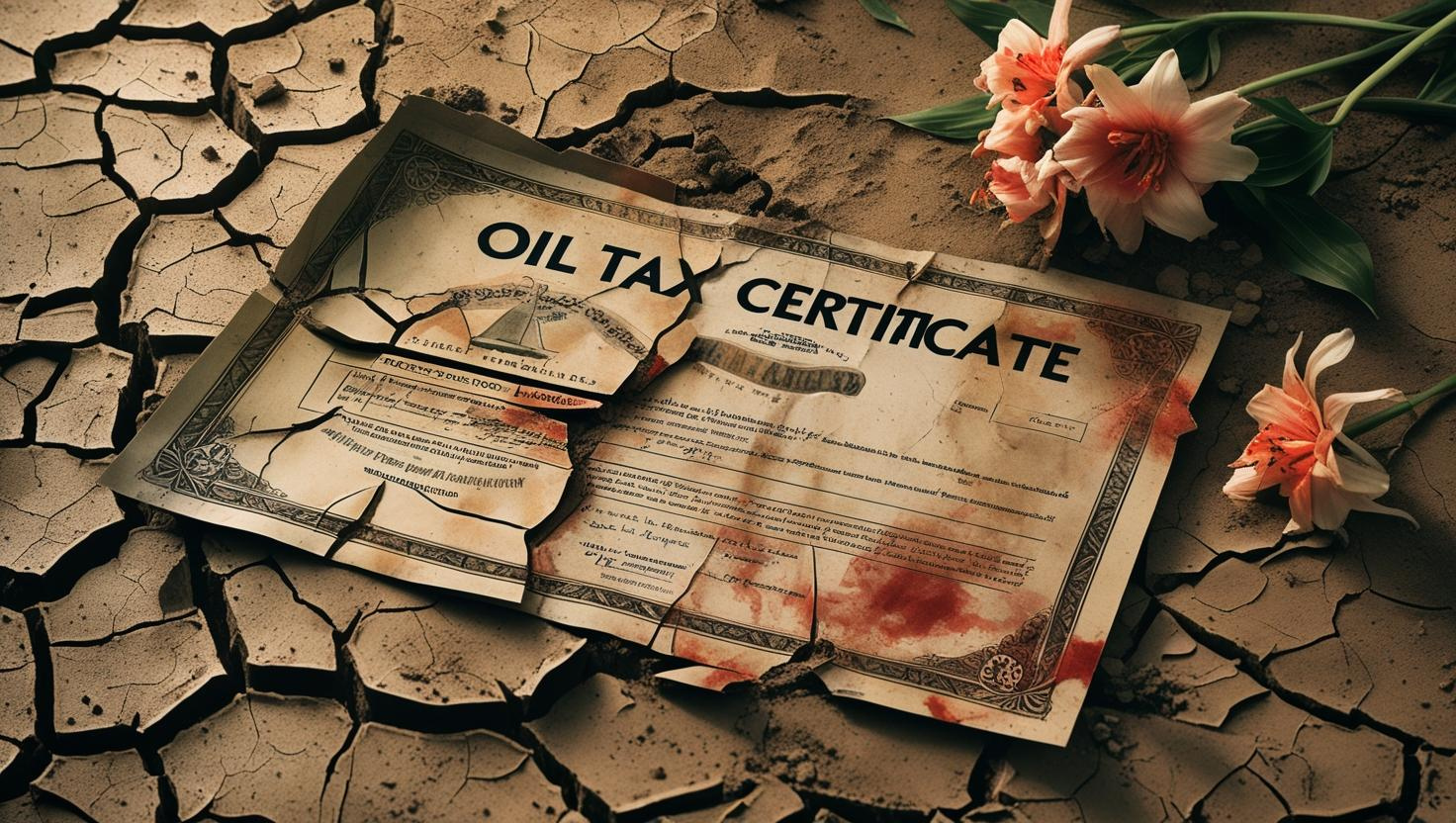
In June 2021, during a Guyana Extractive Industries Transparency Week conference, in response to a question, Mr. Gopnauth ‘Bobby’ Gossai Jr., Senior Petroleum Coor-dinator in the Ministry of Natural Resources, indicated that the tax certificates issued to the oil companies—for taxes which the oil companies did not pay—would be made public. Please see his statement on this matter at this link: https://youtube/sd8oiNNQqXQ?t=2808. A letter dated July 22, 2021, was sent to Vickram Bharrat, Minister of Natural Resources, requesting disclosure of the information, but there was no response. That letter was subsequently published in the newspapers (https://www.kaieteurnewsonline.com/2021/09/24/oil-gas-governance-network-awaiting-response-from-govt-on-tax-certificates-issued-to-oil-companies/)
Canada ranks as the world’s fourth-largest oil and gas producer. Over the next decade, the Canadian government is expected to collect several hundred billion dollars in taxes and royalties from oil and gas companies. Without these tax revenues, Canada’s healthcare system and other infrastructure would likely face serious impairment. Even the thought of eliminating taxes on profit oil in Canada would probably trigger significant public protests, given that Canadian citizens already pay approximately 42% of their income in taxes.
We call on the government to release the annual tax certifi-cates issued to the three members of the Consortium, as it has promised. It is troubling that the Government of Guyana is withholding these tax certificates more than 4 years after it promised to disclose them. Hence, one should ask: is the Government more concerned about protecting Exxon and its partners than acting in the best interests of Guyanese?
Sincerely,
Janette Bulkan
Kenrick Hunte
Darsh Khusial
Joe Persaud