

By Janette Bulkan and John Palmer
The information sheet for the US national census and household survey in 2020 states briefly the objectives: ‘The Census provides us with data on the National, State, and Local levels that help define who we are as a nation and the makeup of the people that live in this country. Data on race, age, population, sex, housing, and more are gathered by the Census which is used by governments, non-profits, and other agencies to get a better understanding of their communities and how to best serve an ever-changing country. This data is free to use by anyone who is interested and is one of the most vital tools used by public and private sector workers on the Federal, State, and Local level.’
Surely that is also the purpose of a national census in Guyana?
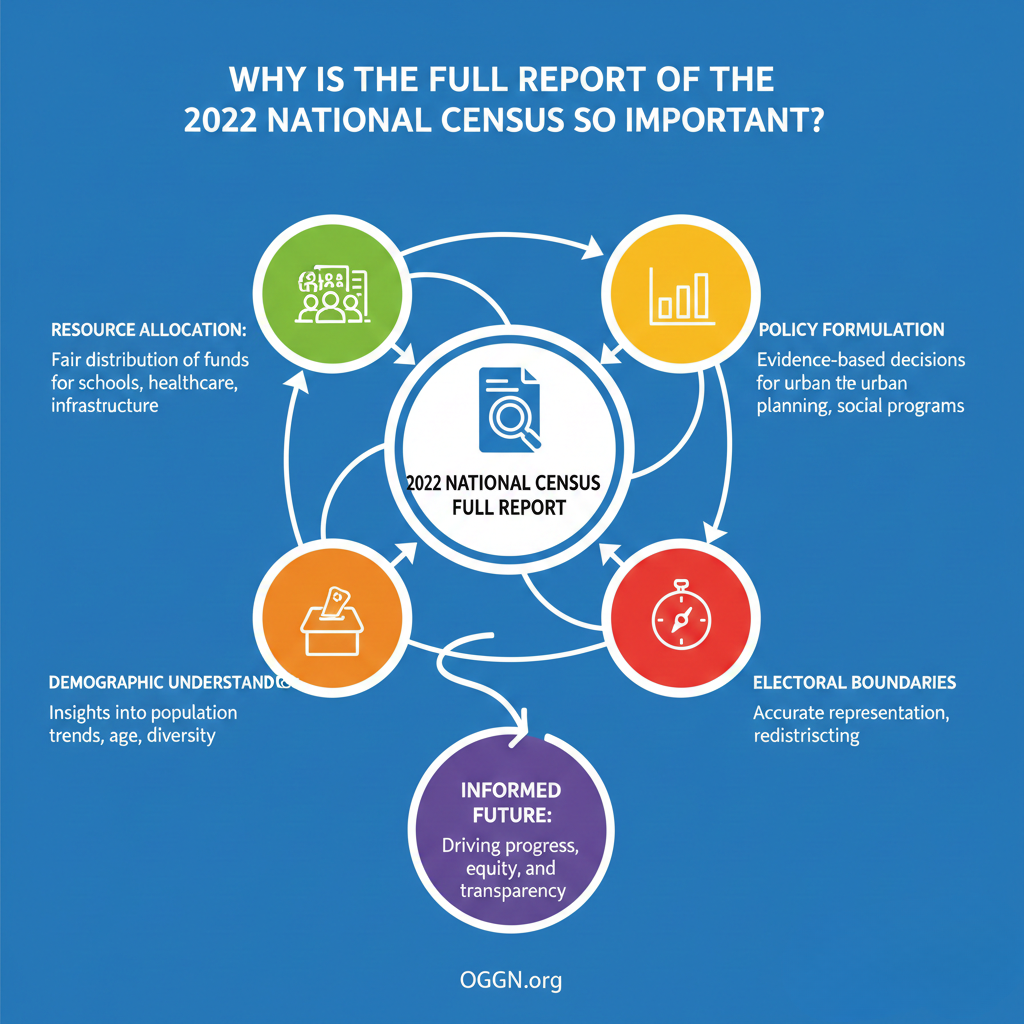
And so it was reported in January 2026 when the Guyana National Population & Housing Census 2022 Preliminary Report was released. Guyana’s Bureau of Statistics – the agency that administers the decennial censuses – lauded the Report as ‘…vital for assessing the socioeconomic needs of the population,’ and one that ‘will support evidence-based policymaking, development planning and resource allocation’ (section 1.1 of the Preliminary Report). Furthermore, according to the Bureau, ‘Additionally, updated census data enhances monitoring and reporting on Guyana’s progress towards achieving the Sustainable Development Goals (SDGs)1 and targets by providing a broader cross-section of data.’
However, the Guyana government does not mention the data from the national censuses as the basis of its decision-making.
The US 2020 national census was fully reported within two years, and recorded a resident population of 331 million persons. It took 3.3 years for Guyana’s Bureau of Statistics to issue a Preliminary Report on the 2022 national census, which claimed a resident population of 878,674 persons.
It is not clear why our 2022 national census has needed three years for just a Preliminary Report to be released on 12 January 2026. Using its own data, Guyana’s Bureau of Statistics counted about 740 persons daily over the 1,185 days it took to release their Preliminary Report. Nevertheless, the Bureau of Statistics was effusively praised by President Ali at the handing over ceremony on 12 January 2026, ‘for “their diligent and successful execution of the 2022 census”, noting the magnitude and scale of the undertaking. He also reaffirmed the value of the data gathered from the census for the purposes of informed policymaking by his Government, including for the purposes of public investment decisions going forward’.
Comparison with the 2012 Census
Guyana’s Bureau of Statistics had done a comparatively better job with the 2012 Census issued a decade earlier. The Guyana National Population & Housing Census 2012 Preliminary Report was released by the Bureau of Statistics in June 2014, with the multi-volume main report published two years later. The five compendia for 2012 provided information on (1) national population trends, size and growth, inbound and outbound migration; (2) population composition including by ethnicity, age and sex, and religious compositions; (3) economic activity, labour force, employment and unemployment; (4) education, fertility, infant and childhood mortality; (5) housing stocks, tenure rates, amenities within households. Supplementary tables included life tables, households per village and population by village.
A more detailed study of a sample of 11 coastland and hinterland Amerindian villages (337 households) was conducted by the Inter-American Development Bank in 2014 and reported in 2019.
It is alarming that the current government appears to have been taking decisions, including on the allocation of funds, which were not, and are not, based on census data. Cash handouts in January 2026, such as GYD 2.1 billion for rice farmers, GYD 1 billion for 7,000 fisherfolk, also seem to rely on partial and ad hoc information about eligibility, instead of on census data. In his Accountability Watch column, Anand Goolsarran questioned the legality of cash handouts after the close of the financial year and before the budget approval for the following year.
After the cash grants had been disbursed to rice farmers and fishers – constituencies that are in the majority ethnically East Indian, and traditional supporters of the ruling Party – the President declared belatedly on January 17th that cash grants were ‘not sustainable’. The President’s tone deafness was not missed: Ali’s remarks were made ‘during the launch of private banking services by the Guyana Bank for Trade and Industry (GBTI) at its Kingston headquarters’. The contrast is with the incomes and lives of the 58 per cent of our people who are below the poverty line. The news story was accompanied by a photo of the President, First Lady, and the Chairman of GBTI. According to Artificial Intelligence (Google AI), the worth of what look like the First Lady’s iPhone 17 Pro or iPhone 17 Pro Max and Christian Dior Lady D-Joy bag, on display in the photograph, were together worth about GYD 1.3 million (U$6,000).
The lack of policy coherence was also evident a week later, when the Senior Minister in the Office of the President with Responsibility for Finance announced that every Guyanese over 18 years of age would receive a cash grant of GYD 100,000 in 2026.
Lack of trust in the Bureau of Statistics and GECOM
In his sobering analysis of Guyana’s 2026 Budget, Chris Ram noted: ‘The performance of the Statistical Bureau in the 2022 Census has shaken the public trust … Only inadequate, preliminary results have been released, long after promised timelines, with no commitment to publication of the full report’.
The lack of public trust applies to all aspects of life in Guyana, including in the inflated demographic figures for Guyana’s perennially fraught elections. An example from 2025 is illustrative. On 11 July 2025, a two-page advertisement titled ‘World Population Day. Message from the Senior Minister with responsibility for Finance and the Public Service,’ issued by the Ministry of Finance and the Bureau of Statistics in both Stabroek News and Kaieteur News included no data on Guyana’s population! However, the government advertisement included a small image of Guyana’s population pyramid, so we measured the age classes in the pyramid, to interrogate GECOM’s voter roll before the 2025 national election. That government-issued population pyramid suggested that 37 per cent of Guyana’s male population and 39 per cent of Guyana’s females were under 19 years of age in 2023. Extrapolating from that data, we wrote, ‘If everyone above 19 years of age voted, the voters list would have comprised at most 513,000 in 2023 (253,548 males and 259,424 females), based on the census estimates of the World Bank, from population totals of 402,457 males and 423,896 females’.
In 2015, the voters’ list was 570,708. GECOM’s list grew to 660,998 in 2020 (by 90,290 or 16 percent over 5 years) and to 757,715 voters in 2025 (96,717 increase, a further 15 percent). GECOM has the voters’ list growing much faster than the population itself, so that the 2025 list was 48 per cent larger than what the census data indicated was possible (757,715 according to GECOM, compared with 513,000 from the Ministry of Finance and the Bureau of Statistics’ population pyramid).
The government’s explanation for the inflated voters’ list was that the Representation of the People Act had been amended to allow any Guyanese – whether resident in Guyana or overseas – who was listed at an address in Guyana to vote in Guyanese elections. The inference was that large numbers of Guyanese resident overseas as well as Commonwealth citizens resident for one year in Guyana could have been registered, making up that 48 per cent. And indeed, some diasporic Guyanese did collect a cash grant intended to alleviate the high and rising cost of living in Guyana, based on their retention of a local residential address.
In addition, since GECOM has no effective system for removing the names of Guyanese who have died while overseas, both the Transparency Institute of Guyana Inc (TIGI) and GECOM’s three Opposition Commissioners maintain that the voter roll is probably inflated. TIGI described GECOM as incompetent and politically-captured.
One example of the value of credible census data
Credible, granular census data would enable agencies to prepare targeted policies and actions for government spends/national budget. Let us consider one example, Silica City on the Soesdyke-Linden Highway, proposed before 2015 for 15,000 people. According to the Government, ‘In addition to smart homes, the city will feature the newest energy-saving technologies for wastewater management, energy management, and water conservation. The city will have recreational parks, community centres, an electricity grid, and a multi-specialty health facility, catering to the social needs of citizens.’
However, published photos showed unimaginative concrete boxes in rectangular layouts sited on white sand soils. Where are the promised shops/shopping centres, health centres, recreational areas, and the multistory apartment blocks? Where are the mosques/churches/mandirs/, the supply and repair yards, schools, civic offices for the mayor and council and local government? These may be in the University of Miami master plan prepared for then Housing Minister Irfaan Ali more than a decade ago. A published census report would show from the family compositions what will be needed to serve each age class, and help the timing of phases of construction. Although power lines are up and drains in place, there is no sign of the public buildings needed to make a viable city as opposed to a dormitory for Georgetown office workers.
The governance issues should be more worrisome for Guyanese than the lack of evidence of civic amenities. Chris Ram noted, ‘the Silica City project … operates in near-complete secrecy. … the public has been told nothing of how it is financed, how it is structured within government, or by what criteria the beneficiaries of its house lots will be selected. That pattern was maintained most recently as last week, when Collin Croal, Minister of Housing, announced that agreements have been signed and allocations of houses made, without accompanying disclosure of any legal authority, eligibility rules, pricing framework, or institutional approvals governing those allocations’. In their Budget Focus 2026, Ram & McRae also noted that ‘the normal framework of project disclosure and parliamentary scrutiny’ are not applied to Silica City, the Heroes Highway, or the Schoonord to Parika highway.
Release the full 2022 census, and let us see it applied in government planning
A study of the 2022 census results would allow better targeting of the 2026 budget. Spending a high proportion of the budget again on building and maintaining roads and bridges, and concrete shells for schools and hospitals, is an easy way for enriching a tiny proportion of the national population. Creating solar power stations and installing Starlink satellite receivers in hinterland communities to enable reception of GOAL curricula – as done by the current government – helps to build human capacity, and the census data would show how many would benefit and where. How many laptops do we need, and where, to make use of the LEO-WiFiGY internet connections so that whole families benefit from the educational opportunities? How many trainers and repair technicians are needed in support? We should be able to derive the answer from the full report of the census.
The day following the publication of the Census 2022 Preliminary Report, Stabroek News published the 164th weekly instalment of its How the Cost of Living is affecting People series. The weekly accounts of grinding poverty from 1,640 Guyanese so far – all with accompanying photographs – are hard to read. The majority of the Guyanese interviewed live in coastal communities, close to the displays of wealth flaunted by the small percentage favoured with public largesse, compliments of government contracts.
A targeted cash grants programme would see the government using the census data and the Stabroek News series on ‘How the Cost of Living is affecting People’ to identify more clearly the 58 per cent of the population living below the poverty line, locate where are the concentrations of the poor, and develop actions to get them out of poverty. And it should be obvious that census data are needed to plan the location and size of schools and health posts and power stations and industries, as well as the linking roads and air strips and power lines. Combining with past census reports would enable the Statistics Bureau to project location and size of future demand, and so improve forward planning to replace the present government’s approach of ‘wake up one morning and build a pump station at Unity’.
Originally posted here: https://www.stabroeknews.com/2026/02/03/features/why-is-the-full-report-of-the-2022-national-census-so-important/