

By Anthony Paul, Senior Energy and Strategy Advisor and former Director of Geology and Geophysics at the Trinidad and Tobago Ministry of Energy.
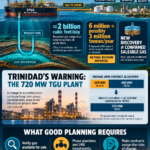
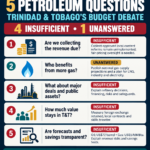
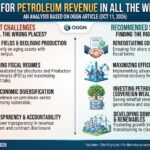
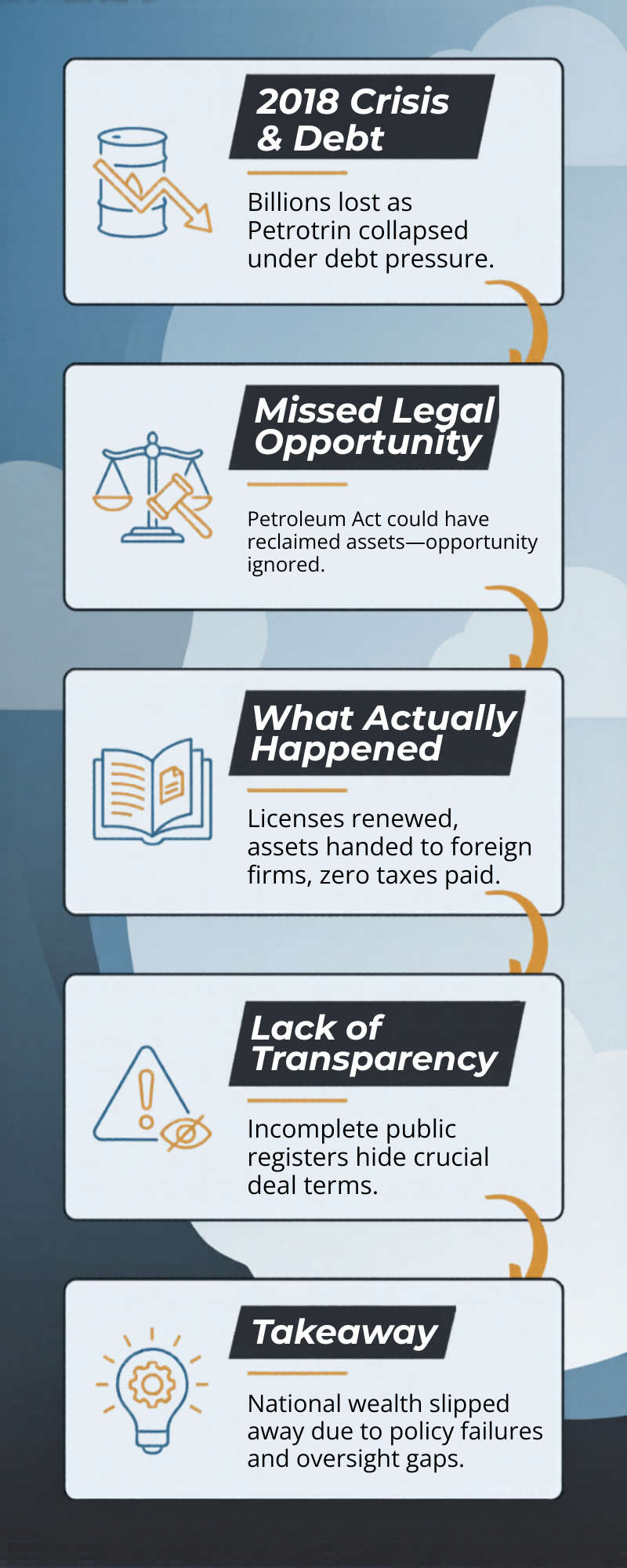
The editor created these infographics for understanding, but Anthony Paul has not validated them. They may lack technical precision, but they remain a useful resource for general readers.
Were billions in State petroleum assets allowed to slip away while the national company collapsed?
“The resources of a nation belong to its people, and governments are merely their trustees.”
WHEN Petrotrin was restructured in 2018, the Government of Trinidad and Tobago faced a critical decision about how petroleum licences and assets reaching renewal or transfer stages should be handled. The Petroleum Act requires these decisions to be recorded in a public petroleum register. Yet some of the country’s most significant licences do not appear in the version available on the ministry’s website. This raises a simple question: were opportunities missed to strengthen the national oil company when these assets and licences were renewed or transferred?
Why this matters now
Trinidad and Tobago’s petroleum sector is continuously entering new and renewing existing licences and will soon be focusing more on energy transition decisions. Understanding how past licence decisions were handled may help ensure future ones better protect national resources and institutions.
At the moment Petrotrin was collapsing under debt in 2018, the Government of Trinidad and Tobago may have held a powerful but little-discussed option: the legal authority to vest producing petroleum assets—likely worth more than the company’s entire debt—into the national company itself and strengthen its balance sheet.
Instead, licences appear to have been renewed with incumbent operators, and several assets were later transferred to other companies, generating windfall gains for foreign investors while Petrotrin’s financial position deteriorated.
Imagine having a struggling company on the brink of bankruptcy while holding in your hand the very tools that could save it.
That was the situation the government of Trinidad and Tobago faced in 2018 with our national oil company, Petrotrin.
Petrotrin was carrying nearly US$1 billion in debt, its refinery had just been shut down, and the newly created Heritage Petroleum Company Limited was struggling to manage a declining upstream portfolio.
And yet the government—Petrotrin’s sole shareholder—may have allowed billions of dollars in assets, reserves and production to slip through its fingers.
How? By allowing international operators to retain or sell assets that, by law, belonged to the State and could have been vested in Petrotrin.
Platforms, pipelines, wells and processing facilities—assets already paid for by the people—appear to have remained under foreign control.
That is the question this article seeks to explore.
Taxpayers paid for assets others later sold.
Some of these assets were later sold to Perenco and Touchstone Exploration, generating substantial windfall gains for BP, Shell and Woodside, often with little or no tax collected by the State.
This may not simply be an accounting mistake or bad luck. It raises deeper questions about policy choices, governance oversight and whether opportunities to safeguard national resources were missed.
And it came at a time when Petrotrin could potentially have been rescued, strengthened and set on a more sustainable path.
What happened next shows how easily a country can lose control of assets it already owns—not through geology or markets, but through the quiet consequences of policy decisions and lack of transparency and accountability.
This episode connects directly to themes explored in two earlier articles in this series—Balancing Risk and Reward; and Lessons from the Past and Present: The Strategic Logic of Participation.
Those articles examined how Trinidad and Tobago was once required to build capacity for State participation in petroleum exploration and production to rescue its industry after BP and Shell, having fed on our resources for decades, fled our shores for more lucrative opportunities elsewhere.
That policy, later embedded in law, helped build domestic capability, strategic oversight and national influence within the sector.
The story that follows raises an uncomfortable question: what happens when that strategic discipline fades—and how the country might have been better prepared for when multinational operators move out again, as they inevitably will.
When oversight weakens, opportunities that should strengthen national institutions, industrial capacity and economic independence can quietly migrate elsewhere—sometimes to companies that did not create or pay for the assets in the first place.
While this example relates to oil and gas, the issues that underpin it might give valuable lessons for governance across other sectors, not least of which is the inevitable transition to cleaner fuels.
2018: A critical crossroads
Let us return to 2018.
Petrotrin had just shut down its refinery, and Heritage Petroleum was stepping in to manage the upstream portfolio. At the same time, BP and Shell licences controlling dozens of wells and offshore platforms producing hundreds of thousands of barrels of oil equivalent per day were approaching the end of their life.
The companies sought renewal or extension.
Under Section 16 of the Petroleum Act, the law sets out what happens when an Exploration and Production (Public Petroleum Rights) Licence expires or is surrendered.
The act states: “Within two months after the expiration or sooner determination of any Exploration and Production (Public Petroleum Rights) Licence…and without payment of any compensation…the licensee shall deliver up to the minister…all buildings, works, pipelines, other articles used in the licensed area, productive boreholes or wells… together with all casings, engines, tubings and fixtures below surface level.”
In practical terms, this means that when a licence expires or acreage is surrendered, the valuable physical petroleum assets revert to the State.
The government then decides whether to issue a new licence to the same operator, grant a licence to another operator, or vest the assets in a national company.
This moment—licence expiry or renewal—is one of the most consequential decision points in petroleum governance. In many petroleum jurisdictions, licence renewals become opportunities to renegotiate participation or strengthen national companies.
That opportunity may have existed in Trinidad and Tobago in 2018.
The choice the T&T government made in the 1990s—when the Amoco licences expired—and continued to make, was to renew existing licences under more or less the existing terms rather than issue new ones with better conditions.
The implications are enormous.
A new contract that vested some of the State’s equity in Petrotrin could have strengthened the company’s balance sheet by adding proven reserves and producing assets, improving its credit rating and providing leverage to refinance its debt on better terms.
In other words, the law already provided a mechanism for the State to retain and redeploy these assets in the national interest when licences expired.
Yet instead of using those tools to strengthen Petrotrin, the assets were effectively returned to foreign shareholders, free of charge. Some were later sold to Perenco and Touchstone, generating windfall gains while Petrotrin and Heritage remained over-leveraged and financially constrained.
Each transfer represented billions in assets and production, often with no taxes collected because the Petroleum Taxes Act focuses primarily on profits from oil and gas production—not asset sales.
With every asset sale, infrastructure paid for by the State through cost recovery was sold in private transactions to third parties, without any of the proceeds returning to the State.
Meanwhile, Petrotrin and Heritage were left managing a shrinking portfolio, weakening their balance sheets and negotiating power with lenders.
Yet determining exactly what happened is surprisingly difficult.
Because while the Petroleum Act requires that licence decisions be recorded and publicly accessible, the official register appears incomplete.
Law vs public record
The Petroleum Act requires a transparent record of licence actions. If the petroleum register were complete and regularly updated, answering these questions would be straightforward.
But the online register appears incomplete, and some of the most significant licences in the country do not appear in it.
As a result, the public cannot easily determine whether major licences were renewed, extended or modified—and under what terms.
Licence renewals/extensions and asset transfers
To understand what happened around 2018, it is important to distinguish between two developments.
• Licence renewals or extensions: Existing operators were allowed to continue producing from assets already in place and paid for by the State, without compensating the State, and under terms existing for two decades, or under terms to be negotiated prior to renewal/extension.
• Asset transfers: Operators later sold or transferred licence interests to other companies.
Both occurred during the period when Petrotrin was being dismantled.
Petrotrin certainly had problems—operational inefficiencies, corruption, governance weaknesses and financial strain. But those shortcomings did not require the nation to surrender valuable assets it had already paid for.
The real question is not whether Petrotrin had problems.
It did. The real question is whether the moment when the State regained legal control of these assets was used—or missed—as an opportunity to strengthen its own company.
In Part II we will examine what could have been done differently, how gaps in the Petroleum Taxes Act allow huge leakages to multinational companies, at a time when Government’s response to the fiscal deficit is putting pressure on the population at large—and why licence renewals and transfers can be some of the most powerful policy tools available to governments managing petroleum resources.
Anthony Paul