Dear Editor,
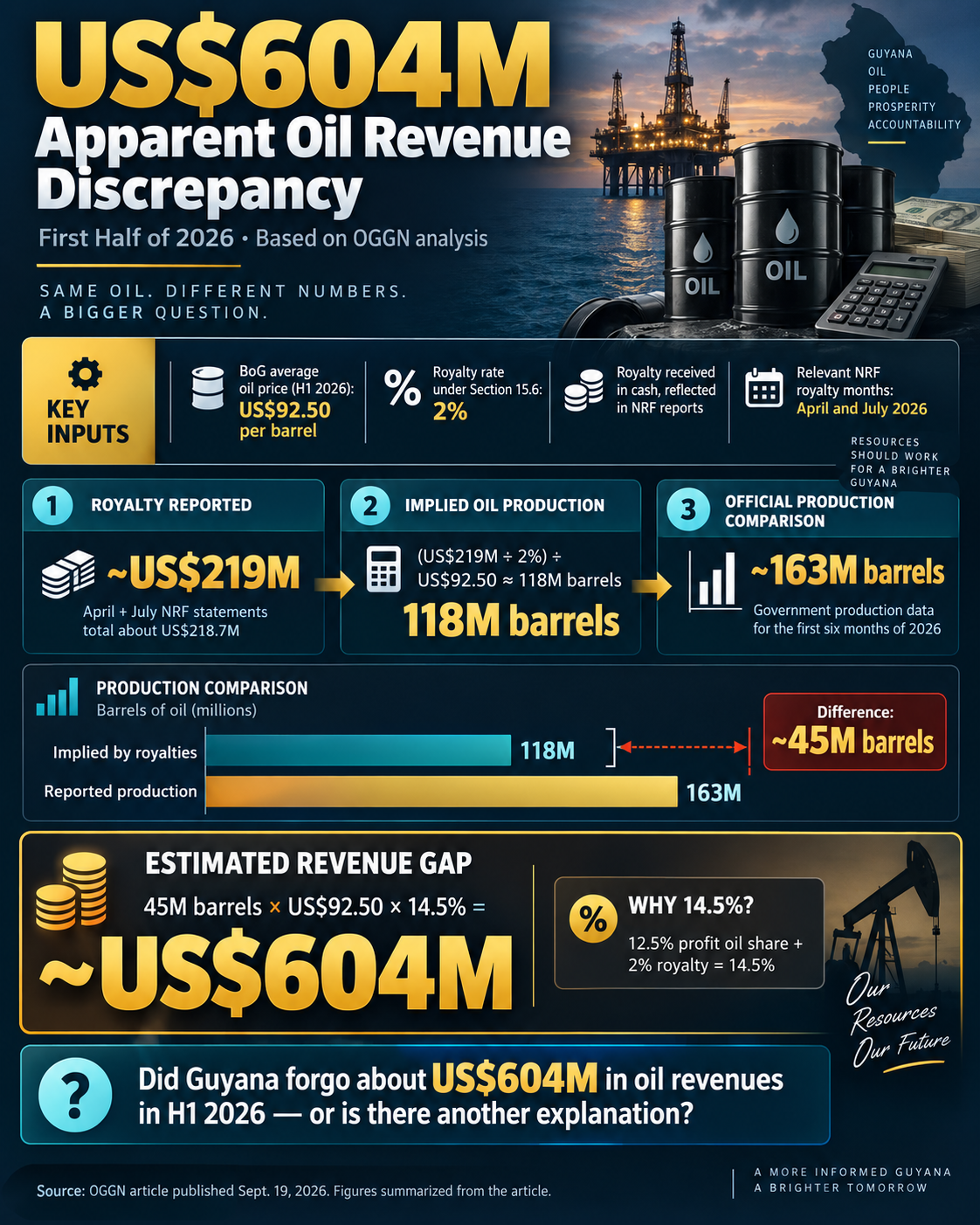
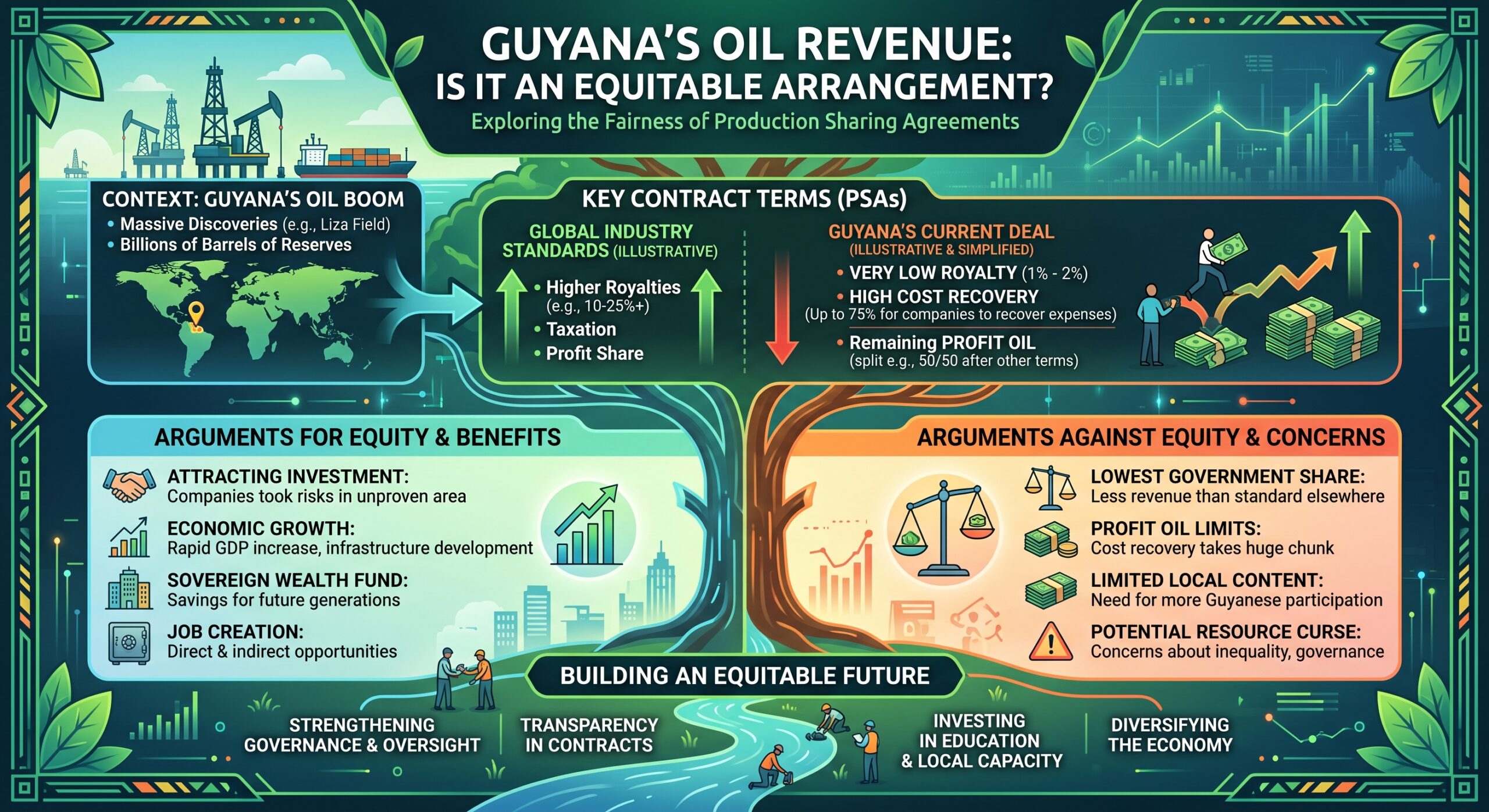
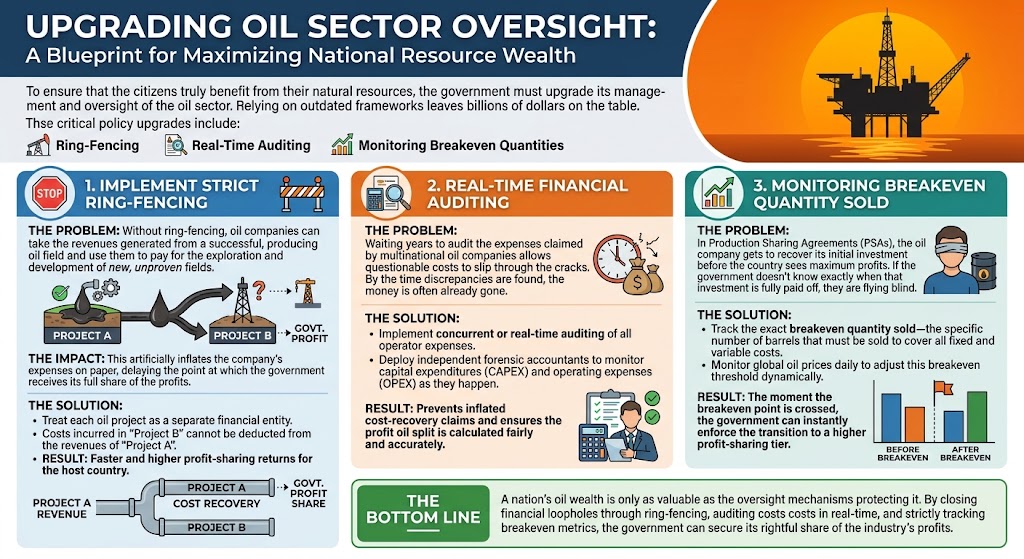
One of the most important questions in the oil industry is: At what quantity of barrels of oil sold will the investment cost of any project be repaid? The reason for knowing the answer to this question is because the cost recovery formula of 75% of total revenue, which is applied to the total investment cost of any project under the 2016 PSA, can be terminated; and thereafter, only operating/cash cost would remain legitimate. The main implication of this result is that when the investment cost has been repaid in full, the absolute size of profits will significantly increase in each project, and Guyana’s benefits in absolute terms will be much larger than what is currently generated by the company that operates without any serious government oversight responsibilities. To overcome this troubling situation, one approach would be the application of ring-fencing on every project. Therefore, the purpose of this letter is to show how ring-fencing can be applied to the repayment accounting for the investment in Liza 1, Liza 2, Payara and Yellowtail by identifying the number of barrels of oil sold from 2020 to 2025; calculating the total revenue generated; deriving the quantity of oil sold that pay-off the total investment; and thereafter, calculating the increase in profits that Guyana should receive after the investment cost is repaid in full. These accounting results will be shown below. It has been reported that the total original capital cost of Liza1, Liza 2, Payara and Yellowtail is US$28.5 Billion and the operating cost per barrel of oil is US$10.00 (https://kiskadeewatch.com/opinion/letters/lack-of-ring-fencing-cut-guyanas-2025-profit oil-entitlement-by-us4-9b/).
During the period 2020 to 2025, the total number of barrels of oil sold was 796.5 Million barrels; but to cover the investment cost, only 566.5 Million barrels of oil were required to be sold to repay the capital cost and the operating cost (Table A).

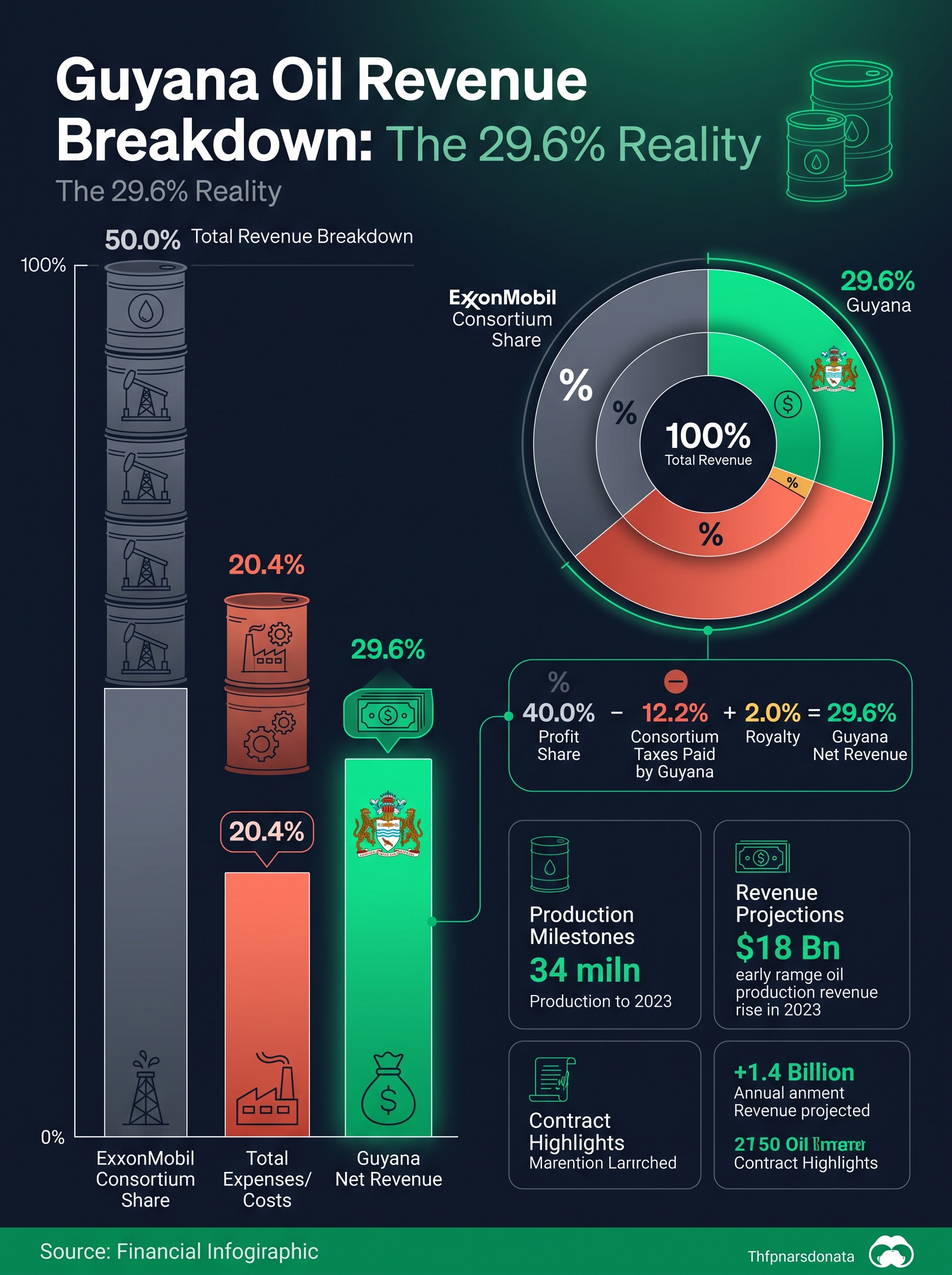
In this arrangement, the total revenue (TR) earned from the sale of 566.5 Million barrels of oil was US$45.6 Billion (Table 1), with the total cost (TC) of the oil sold being US$34.2 Billion (75% of revenue see Table 1), consisting of operating cost of US$5.7 Billion plus original capital cost of US$28.5 Billion; and the total profit US$11.4 Billion (Profit = Total Revenue (US$ 45.6 B) – Total Cost (US$34.2 B)), yielding 50 percent profit of $US$5.7 Billion for Guyana or 12.5 % of Total Revenue of US$45.6 Billion (Table1).

It should be noted that the total number of barrels of oil sold in 2025 was 260.3 Million barrels, but only 30.2 Million barrels of oil extracted and sold in 2025, plus the 536.3 Million barrels of oil extracted and sold between 2020 to 2024, yielding a total of 566.5 Million barrels of oil were the required number of barrels of oil that were needed to pay-off the Investment of US$34.2 Billion (Table B).

Therefore the remaining 230.1 Million barrels of oil sold in 2025, which earned US$ 15.7 Billion, were free of any investment cost; and only operating cost (US$2.3 Billion) was a legitimate cost (Table 2). Please observe that the Capital Cost in Table 2 is zero.

As a result, the profit earned from the sale of 230.1 Million Barrels of oil was US$13.4 Billion ( Profit = Total Revenue (US$15.7 Billion – Total Cost (US$2.3 Billion), with Guyana 50 percent profit share being US$6.7 Billion (Table 2). Having presented the information on profits with and without the investment cost, the remaining sections of this letter will address the ring-fencing and no-ring-fencing outcomes. The no-ring fencing case, which is based on the 2016 PSA, requires that 75 percent of the total revenue earned must be captured as cost, with the remaining 25 percent split in half, yielding for Guyana just 12.5% of total revenue as profit share. Since total revenue earned between 2020 and 2025 is US$61.3 Billion, therefore 75 percent cost recovery is US$46.0 Billion and Guyana profit share of 12.5 % of total Revenue is US$7.7 Billion (Table 3).

In the ring-fencing case where capital cost has been repaid in full, and only operating cost is legitimate, this implies that the 75 percent cost recovery mechanism is now null and void; and the only cost that matters is operating cost. Consequently, the total cost under ring-fencing declines from US$46.0 Billion under no ring-fencing (Table 3) to US$36.5 Billion under ring-fencing (Table 4).

Acknowledging that total revenue is the same at US$61.3Billion and total cost is now US$36.5 Billion, this implies that total profit is US$24.8 Billion (Profit = US$61.3B – US$36.5B), with Guyana profit share being US$12.4 Billion or 20.2 percent of total revenue as compared with only 12.5 percent under no ring-fencing; and Guyana profit share is now larger by US$4.7 Billion when compared with the US$7.7 Billion under no ring-fencing (which is 12.5% of the total revenue of US$61.3 Billion from 2020 to 2025). Undoubtedly, ring-fencing will make a significant difference for Guyana as soon as the investment cost is repaid. However, if no ring-fencing continues, and as new projects come on stream without ring-fencing (for example, Uaru and Whiptail are new projects), it will give the understanding that output and profits will be increasing, and Guyana should be joyful; however, since the 75-cost recovery mechanism will still be operable, profits will be significantly understated. And as the saying goes: they (‘the company) will continue to take us for a ride,’ until the oil is done; and it will be too late to do anything at that stage 15 to 20 years from now. It is therefore evident that the Government of Guyana must upgrade their management and oversight responsibilities by including ring-fencing, real-time auditing, and monitoring the breakeven quantity of oil sold that will pay-off the total investment and operating cost in each project. It is also indisputably obvious that the current arrangements and earnings obtained from the oil extraction operation is way below what it should be for Guyana. And if no corrections are made, we already know what future generations will say about us. They will say: Our ancestors were taken to the cleaners. Whiptail? Wake-up Guyana!
Sincerely,
Kenrick Hunte
Joe Persaud
Darsh Khusial
On behalf of OGGN a 501(c)(3)