

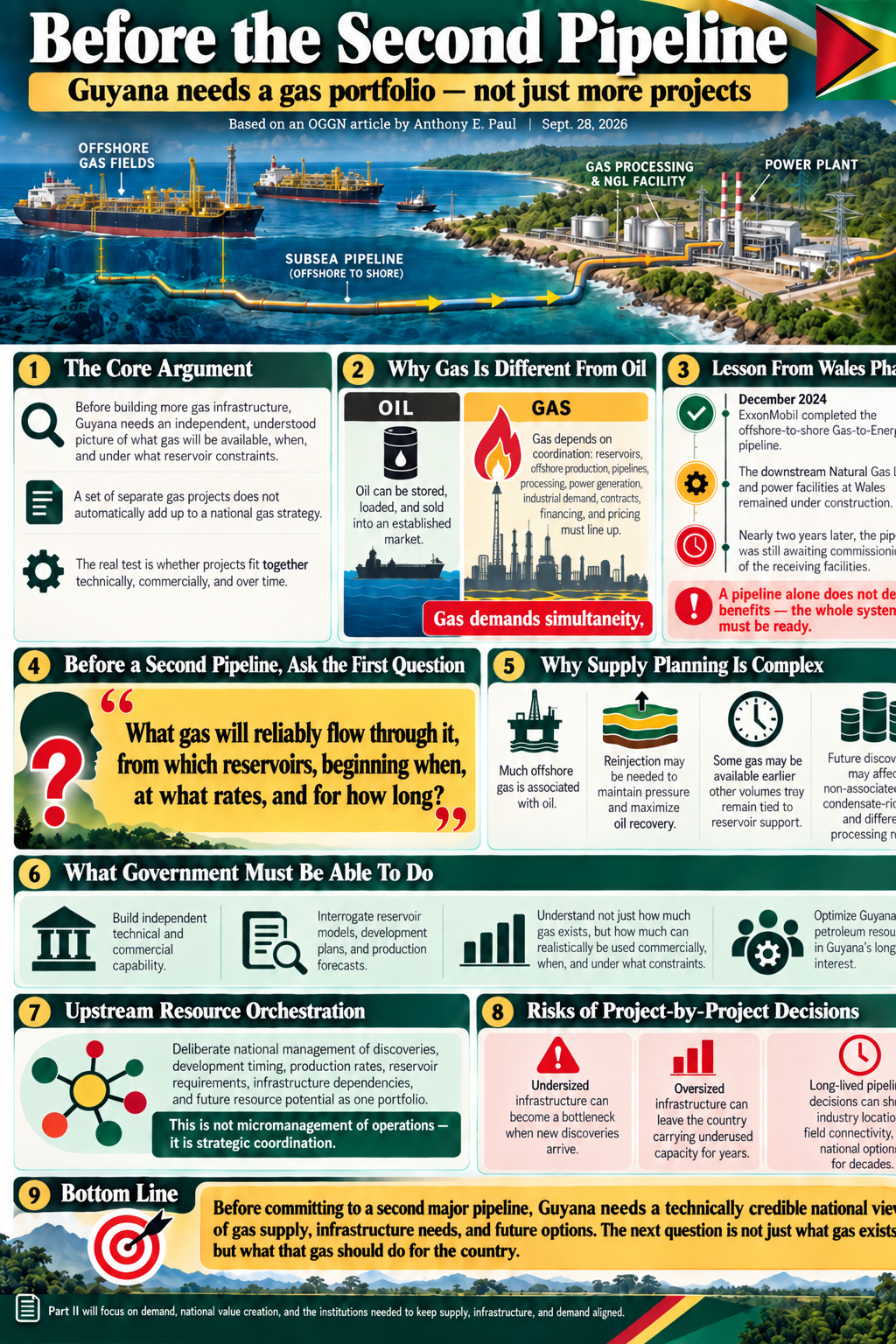
Before Guyana decides how much infrastructure to build, it needs an independently understood picture of what gas will be available, when, and under what reservoir constraints
The editor created these infographics for understanding, but Anthony Paul has not validated them. They may lack technical precision, but they remain a useful resource for general readers.
By Anthony E. Paul
Senior Energy Governance, Policy & Strategy Advisor; formerly Director of Geology and Geophysics, Trinidad and Tobago Ministry of Energy; Amoco Trinidad and BPTT Manager responsible for Exploration and Appraisal / Gas Field Development / Oil Production
When I began writing about Guyana’s emerging gas industry earlier this year, much of the discussion centred on an important transition. Guyana had demonstrated an extraordinary ability to develop oil quickly, but natural gas would require a different approach.
Oil can be produced, stored, loaded onto a tanker and sold into an established international market. Gas is much less forgiving. Reservoir management, offshore production, pipelines, processing, electricity generation, industrial demand, contracts, financing and pricing all have to be brought together, often within relatively narrow windows of time.
That was the point behind my earlier argument that gas demands simultaneity. A pipeline is of limited value if the receiving facilities are not ready. An industrial plant cannot operate simply because gas may become available at some future date, and a power station, pipeline and upstream supply cannot each be planned on separate clocks without creating consequences somewhere in the system.
Guyana already has practical experience of that problem. ExxonMobil completed the offshore-to-shore Gas-to-Energy pipeline in December 2024, while the downstream Natural Gas Liquids and power facilities at Wales remained under construction. Nearly two years later, the pipeline is still awaiting commissioning of the facilities intended to receive and use the gas.
The issue is not simply that one contractor finished before another. Large projects frequently slip. The more important point is that a completed pipeline still has to be monitored, preserved and maintained while it waits, while the economic benefits expected from the integrated development are postponed until the system as a whole is ready.
That experience matters because Guyana is already looking beyond Wales Phase I. Government is considering additional generating capacity, another gas pipeline and a range of prospective industrial uses. The country is therefore moving from the challenge of completing one gas project towards the much more demanding task of managing several sources of supply, pieces of infrastructure and prospective users as parts of one national system.
A second power plant may make sense. A fertiliser plant, petrochemical development or another pipeline may also make sense. But several individually attractive projects do not automatically amount to a coherent gas strategy. The real test is whether they fit together technically, commercially and temporally, and whether their combined development advances Guyana’s long-term interests.
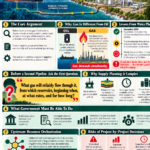
Before the second pipeline, answer the first question
The first question surrounding another pipeline should not be its diameter, route or landing point. Those questions matter, but they come later.
The starting question is more fundamental:
What gas will reliably flow through it, from which reservoirs, beginning when, at what rates and for how long?
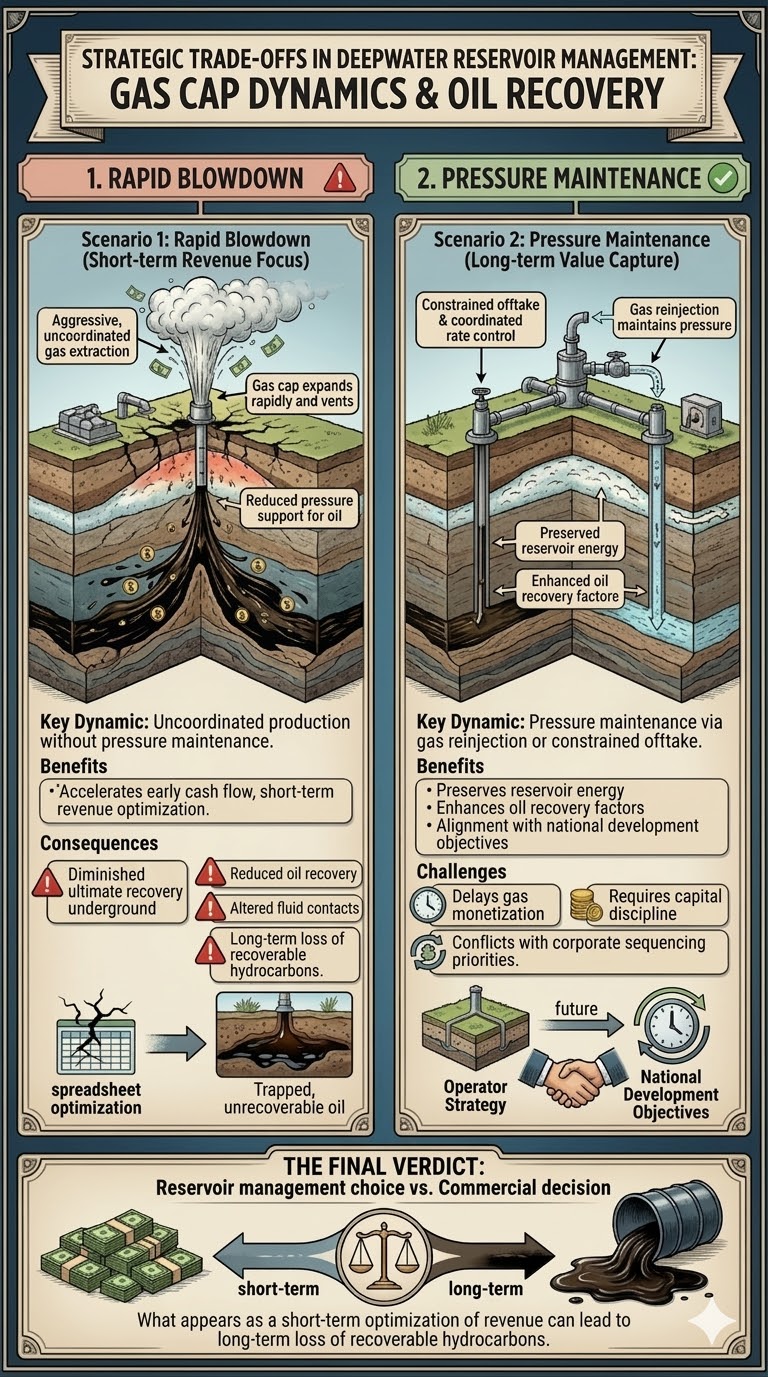
Much of Guyana’s offshore gas is associated with oil. It cannot therefore be regarded simply as an independent inventory of molecules waiting to be assigned to the next industrial project. Gas plays an important role in reservoir behaviour and, depending on the field, reinjection may contribute to maintaining pressure and maximising oil recovery. Producing gas earlier or faster can therefore affect oil production, ultimate recovery and the economics of the upstream development itself.
Those circumstances will not be identical across every reservoir. Some gas may become commercially available relatively early, while other volumes may remain important to pressure support. Some discoveries may contain non-associated gas, while others may be condensate-rich and present different economics, processing requirements and development options.
This is why national gas planning should begin not with a pipeline map, but with an independently understood picture of the resource base and its deliverability.
Government does not have to replace the operator or become a reservoir engineering company. It does, however, need sufficient independent technical and commercial capability to interrogate reservoir models, development plans and production forecasts. It needs to understand not merely how much gas has been discovered, but how much can realistically become available for commercial use, when it may become available, what reservoir constraints apply and how different development decisions could alter those outcomes.
An international oil company will quite properly optimise its investments across a global portfolio. Guyana’s Government has a different responsibility: it must optimise the use of Guyana’s petroleum resources in Guyana’s long-term interest. Those two perspectives can be aligned, but they should not be assumed to be identical.
From individual fields to upstream resource orchestration
This is where Guyana may need to adopt what I describe as upstream resource orchestration: the deliberate management by the State of discoveries, development timing, production rates, reservoir requirements, infrastructure dependencies and future resource potential as one national portfolio.
This does not mean government micromanaging petroleum operations or unnecessarily slowing development. It means recognising that decisions made about one field can affect the choices available elsewhere, and that the country needs to understand those interactions before individual projects progressively determine the shape of the wider system.
If gas from one development is committed under a long-term agreement, that commitment may influence how another field is developed. If infrastructure is sized only around gas that is presently available, it may become a bottleneck when additional discoveries are brought forward. Conversely, infrastructure built around optimistic assumptions about future supply can leave the country carrying underused capacity for many years.
The same principle applies to timing. One field may be delayed, another may produce less gas than forecast, and a new discovery may create additional supply sooner than expected. A future gas development may also contain a different mix of dry gas, condensate and associated liquids, changing the economics of how the resource should be processed, transported and marketed.
Planning therefore has to deal not only with the expected case but with alternative scenarios. That does not create uncertainty; the uncertainty already exists. The purpose of planning is to understand it before infrastructure and long-term contractual commitments progressively close off future choices.
This is particularly important before a second major pipeline is committed. Pipelines are long-lived assets. Once built, they influence where industries locate, which fields are connected and which developments become commercially attractive. An early infrastructure decision can therefore shape the petroleum and industrial system for decades.
Guyana’s first pipeline was principally about proving that offshore gas could be brought ashore and put to productive use. The next pipeline poses a more strategic question: what resource system is that pipeline being built to serve?
That question needs a technically credible answer before Guyana moves much further from a project-by-project approach towards development of a national gas economy.
Understanding the supply side, however, is only half of the problem. Once Guyana knows what gas may be available, it must decide what that gas should do for the country, which uses create the greatest sustainable national value, and which institution will be responsible for keeping supply, infrastructure and demand aligned as the system grows.
That is the subject of Part II.