


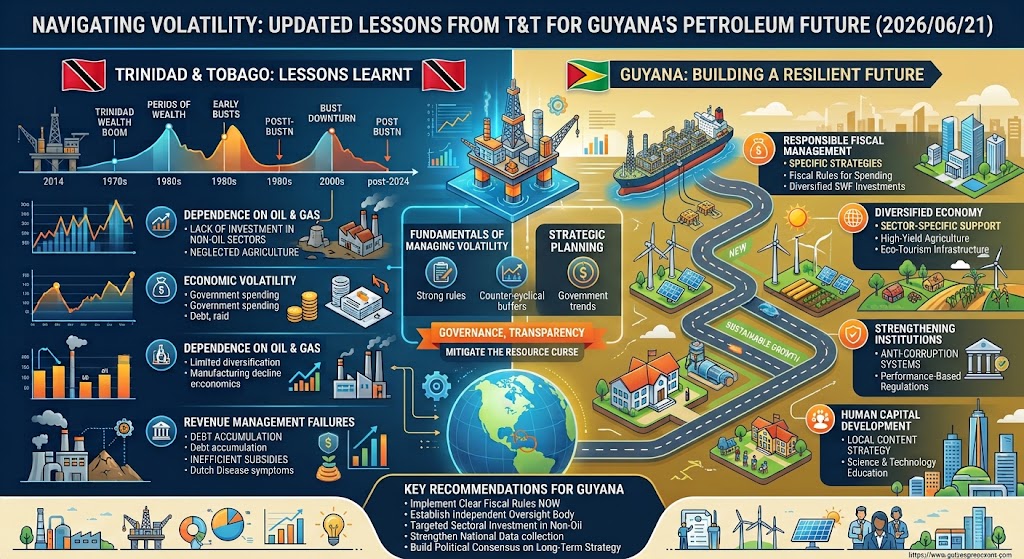
By Anthony Paul, Senior Energy and Strategy Advisor and former Director of Geology and Geophysics at the Trinidad and Tobago Ministry of Energy.
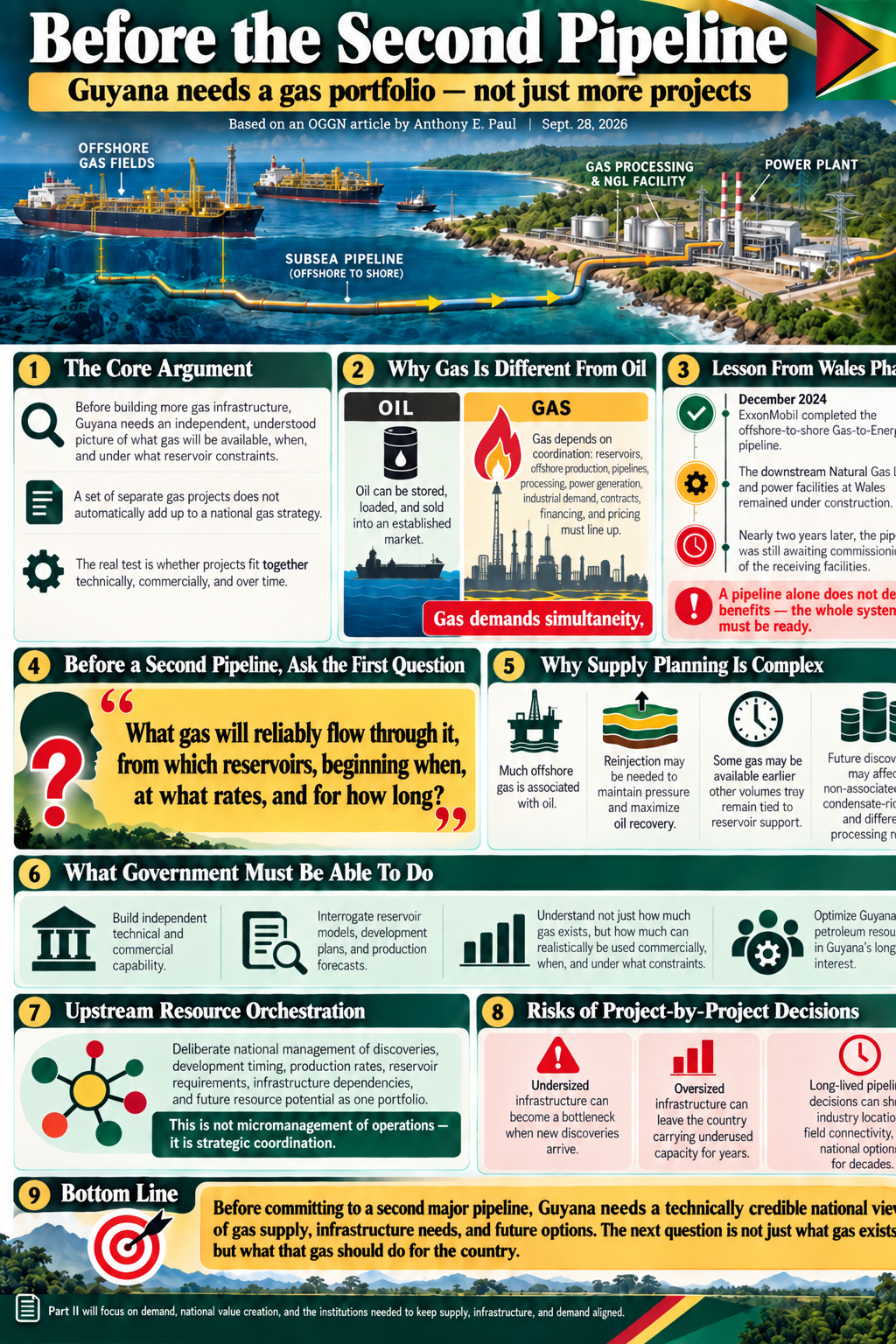
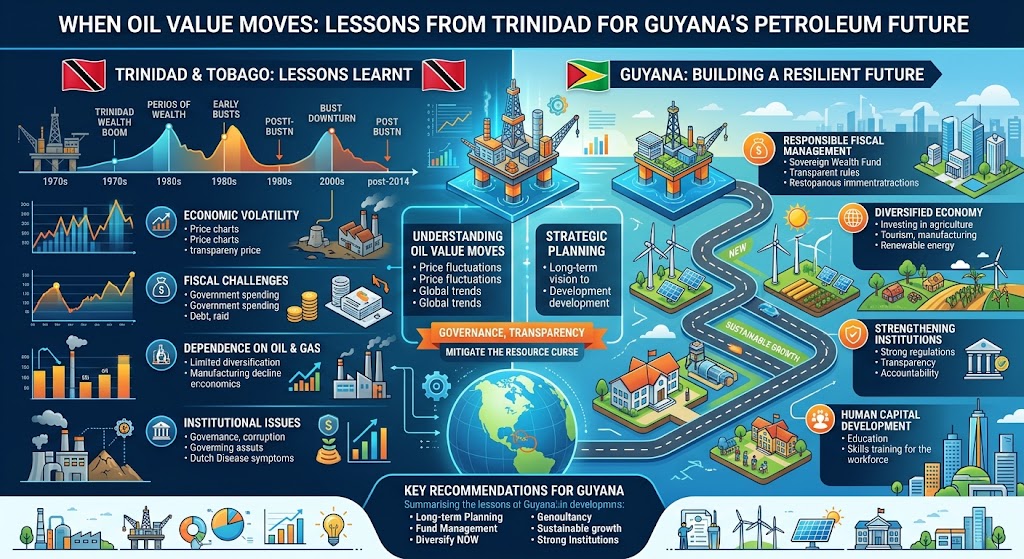
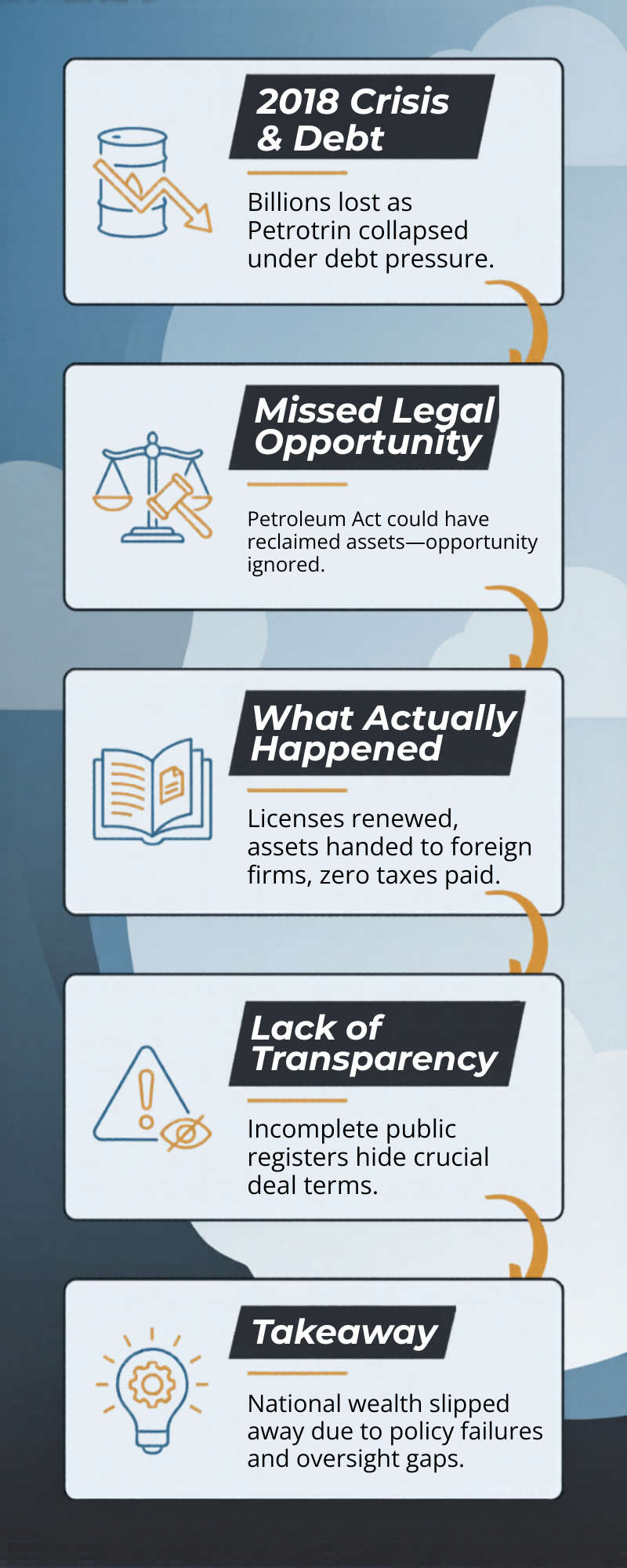
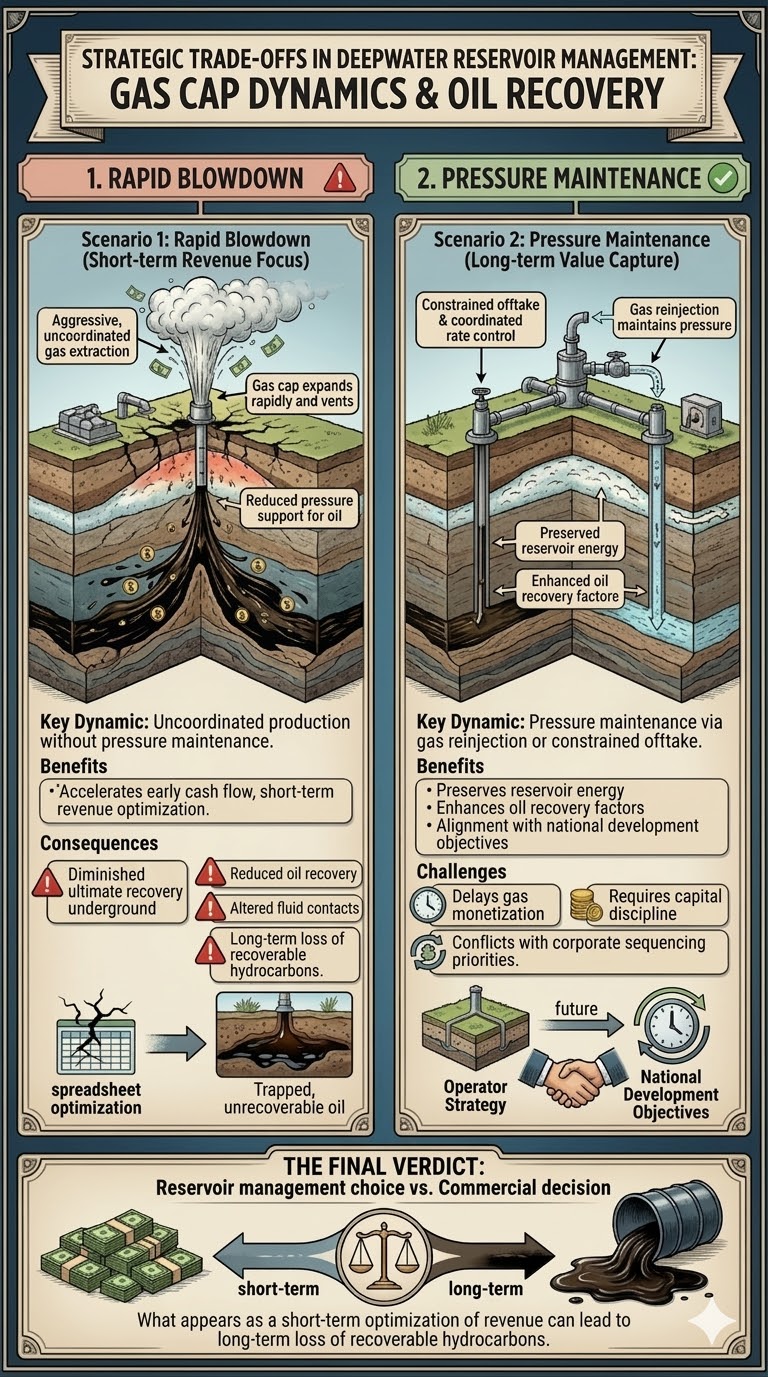
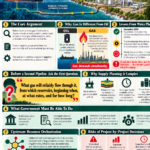
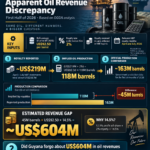
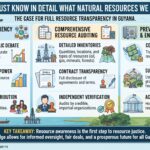
The editor created these infographics for understanding, but Anthony Paul has not validated them. They may lack technical precision, but they remain a useful resource for general readers.
Introduction
Guyana’s petroleum future will not be decided only by how much oil is produced, or how much money enters the Natural Resource Fund. It will also be decided in subtler moments: when licences are granted, renewed, relinquished, transferred, farmed into, sold, amended or hidden from public view. Trinidad and Tobago’s experience shows how even a country with more than a century of petroleum history can lose enormous value when regulators are weak, contracts are kept from public scrutiny, legal safeguards are not enforced, and citizens are not given the information needed to understand and defend their national interest.
Guyana has an advantage: several of its petroleum agreements are already public. But that is only the beginning. Calls to have licences/contracts for Gas-to-Energy projects to be made public illustrate that sustaining transparency is also important. Beyond that, the real test is whether public information becomes public understanding, public vigilance and public accountability before the next major petroleum value moves out of the people’s hands.
ARTICLE 1
Guyana’s Advantage: Do Not Let Oil Transparency Slip into Secrecy
Trinidad and Tobago’s experience shows why public contracts are only the beginning of accountability.
Guyana has one advantage Trinidad and Tobago did not use properly: many of its petroleum agreements are already in public view.
That is no small thing.
For years, citizens across the Caribbean were told that oil and gas contracts were too sensitive, too technical or too commercially confidential for public scrutiny. Trinidad and Tobago’s experience shows the danger of that culture. Even where the law required public records, the public could still be left unable to follow what happened to licences, renewals, transfers and assets.
Guyana should not take its advantage for granted.
The issue is not whether the Government has published some contracts. It has. The issue is whether public availability becomes public accountability.
A contract on a website does not by itself protect national value. A licence disclosed after the fact does not necessarily allow citizens to understand what has been given away, what has been retained, what costs can be recovered, what rights can be transferred, or what happens when a company sells its interest.
Transparency is essential. But transparency is not sufficient.
Real transparency must move citizens from awareness to understanding, from understanding to caring, and from caring to a sense of ownership strong enough to hold regulators and policy makers to account.
Trinidad and Tobago offers the warning.
Its Petroleum Act provided for a petroleum register. Licence grants, assignments, renewals, surrenders, terminations and revocations were supposed to be recorded. Notice of these actions was supposed to be published in the Gazette. In principle, that should have allowed citizens, competitors, journalists, unions, investors and public-interest groups to see when petroleum rights changed hands.
But the practical reality was different.
Some of the country’s most important petroleum licences became difficult for the public to track. Major renewals and transfers were announced through newspapers, industry reports or company statements, but the public record was not maintained in a way that allowed ordinary citizens to follow the full chain of rights, obligations and value.
That gap mattered.
When Petrotrin collapsed in 2018, Trinidad and Tobago may have had a powerful opportunity to use expiring or renewed licences to foreign companies to strengthen its national company. Producing assets, platforms, wells, pipelines and related infrastructure may have been available to the State under the law when licences expired or acreage was surrendered. Instead, assets remained with or moved through private operators, and some were later sold.
The question is not whether Petrotrin had problems. It did. The question is whether those problems justified allowing national value to move elsewhere without the State extracting a fair return.
That is the lesson for Guyana.
Guyana is still early enough in its petroleum journey to avoid some of Trinidad and Tobago’s mistakes. It still has opportunities ahead: relinquished acreage, new contracts, farm-ins, asset transfers, corporate takeovers, future gas agreements, and eventual renewals or amendments to existing licences.
Each of those moments can create value.
Each can also move value away from the State if citizens and regulators are not alert.
Guyana should therefore guard fiercely against the slow return of secrecy. It begins quietly. First, a document is said to be too technical. Then an agreement is described as commercially sensitive. Then a project is treated as urgent. Then disclosure is delayed. Then citizens are told to trust the process.
That is how transparency weakens.
That is how secrecy becomes normal.
That is how democracies slide into a form of administrative autocracy where decisions remain formally legal, but practically beyond public understanding.
The Gas-to-Energy project should be a learning point. If key licences, agreements, cost-recovery arrangements, pipeline terms, gas supply arrangements, reimbursements or related project documents are not available in the same way petroleum agreements have been published, then citizens should ask why. Not because the project is necessarily wrong. Not because development should stop. But because a national energy project funded by public resources and linked to petroleum production must be subject to public understanding.
The public should know:
- what agreements exist
• who the parties are
• what costs are recoverable
• what obligations the State has assumed
• whether any licence, right or approval has been granted
• whether any transfer or assignment has occurred
• what information is confidential, and why.
This is not anti-government. It is pro-governance.
A strong Government should welcome this scrutiny because it strengthens its hand. When citizens understand the issues, the Government can say to companies: these are not the demands of a few officials; these are the expectations of a people who understand their resource.
That is powerful.
Guyana should not allow transparency to become a one-time act. It must become a system.
That means public contracts, public licences, public registers, Gazette notices, transaction disclosures, cost-recovery explanations and clear reporting when petroleum rights are granted, renewed, assigned, transferred, relinquished or terminated.
The question Guyana must ask now is simple: should there be a Public Petroleum Register with legal force, public access, regular updates, Gazette notification and a right for citizens, affected communities or other licensees to object or seek review when petroleum rights change hands?
Trinidad and Tobago had elements of this model in law. But weak practice eroded its usefulness.
Guyana should learn from that.
- Do not wait until the assets mature.
- Do not wait until costs are recovered.
- Do not wait until companies sell.
- Do not wait until citizens ask, years later, how value moved without their knowledge.
Guyana’s advantage is that many agreements are already public.
Its responsibility is to ensure that the next generation of petroleum decisions remains public, understandable and accountable.