
ARTICLE 2
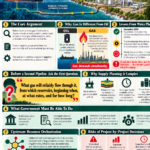
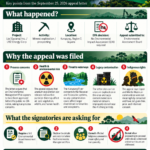
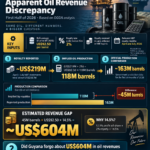
The editor created these infographics for understanding, but Anthony Paul has not validated them. They may lack technical precision, but they remain a useful resource for general readers.
The Next Value Moments: Relinquishments, Farm-Ins, Transfers and Sales
Guyana must watch not only production, but every point where petroleum value changes hands.
Most public debate in Guyana focuses on production: how many barrels, how much revenue, how much cost oil, how much profit oil, and how fast the Natural Resource Fund grows.
Those questions matter.
But petroleum value does not move only when oil is produced.
It can move before production, beside production and after production. It can move when companies farm into a block. It can move when acreage is relinquished and reoffered. It can move when a licence interest is transferred. It can move when a parent company buys another company. It can move when historic costs are recovered. It can move when gas infrastructure is built and repaid from oil production. It can move when a future contract is signed on terms the public does not fully understand.
That is why Guyana has to look beyond production numbers.
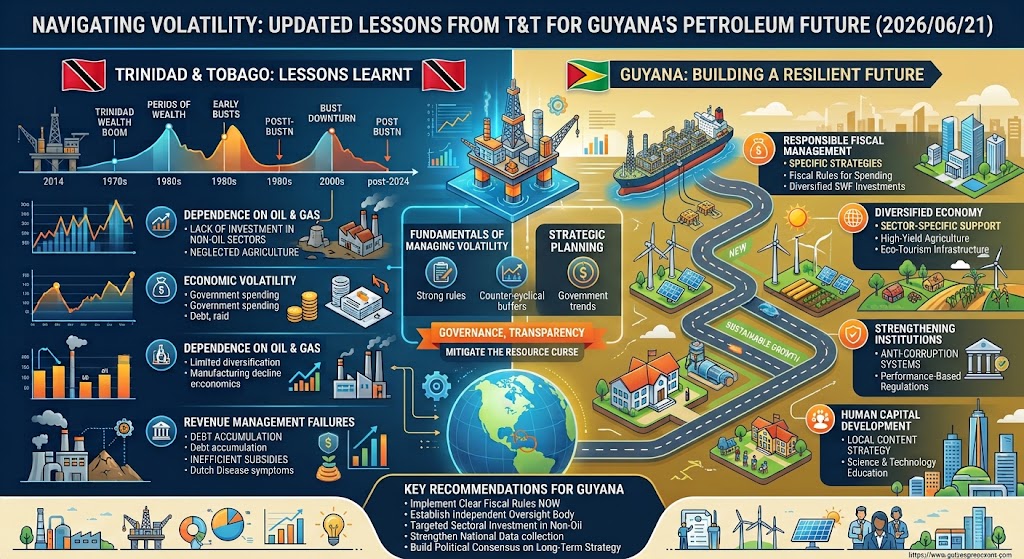
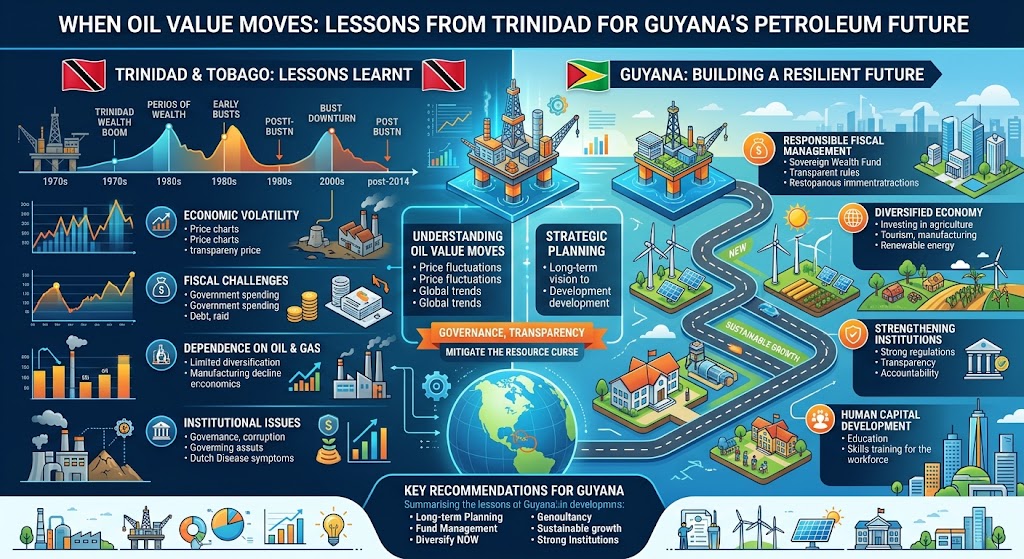
The Trinidad and Tobago experience shows what can happen when mature assets, licence renewals and transfers are not treated as national value events.
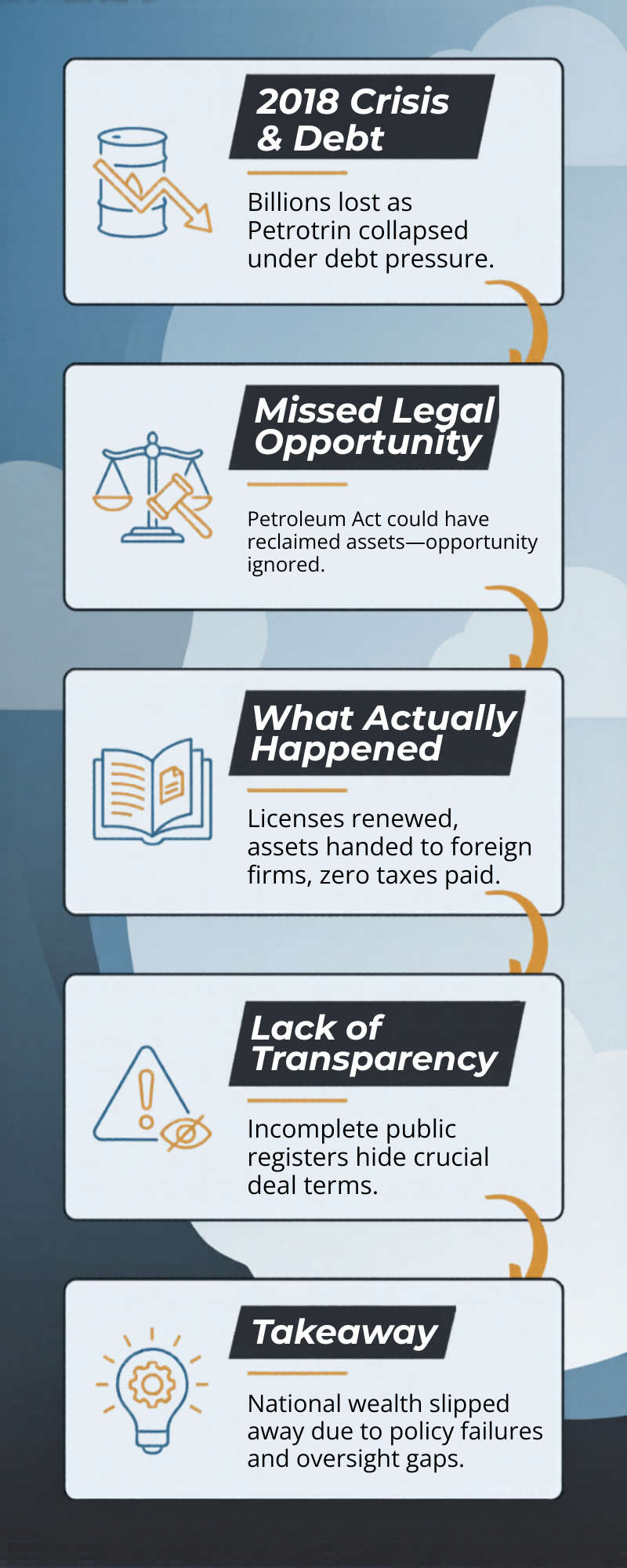
When Petrotrin was collapsing, Trinidad and Tobago could have used expiring or renewed licences to strengthen the national company. Instead, valuable producing assets remained with or moved through private operators. Some were later sold. The public question became unavoidable: if the people’s petroleum had helped repay the cost of those assets, why did the people not capture more value when the assets were transferred?
Guyana should ask that question now, before similar moments arrive.
One such moment is relinquishment.
When acreage is returned to the State, it should not be treated as a routine administrative event. It is an opportunity to review what has been learned, what data exists, what value remains, whether new terms are needed, and whether the State should capture a different kind of participation when the acreage is reoffered.
Relinquished acreage is not failure. It may be information converted into future opportunity.
But only if the State has the capacity to understand what it received back.
Another value moment is the farm-in.
Farm-ins are common in petroleum. A company joins a licence by funding work, sharing risk or paying consideration for an interest. Companies understand this very well. They use farm-ins to manage risk, acquire access and position themselves for future upside.
The State should understand the same logic.
When a company farms into a Guyanese petroleum block, citizens should be able to know whether a premium was paid, whether costs were assumed, whether historic expenses were transferred, whether any consideration was taxable, and whether any change in control required approval.
That does not mean every commercial detail must be published immediately. But it does mean the regulator and tax authority must have full visibility, and the public must receive enough information to know that national value was protected.
The Stabroek Block makes the issue concrete.
Shell was an early partner and exited before the major discoveries. Hess and CNOOC’s predecessor entered the block. Later, Chevron’s acquisition of Hess effectively gave Chevron Hess’s 30 percent interest in one of the world’s most valuable petroleum positions.
Each of those moments raises governance questions:
- Did any party pay a premium to enter?
• Was any consideration taxable in Guyana?
• Did any historic cost move with the transaction?
• Did the Government receive any tax, fee or disclosure?
• Did the regulator have access to the agreements?
• Did the tax authority review the value transferred?
• Did the public receive an explanation?
These questions are not accusations. They are normal questions in any serious petroleum state.
They also matter because Guyana does not yet have a national oil company with decades of operating experience inside these transactions. Without a national company or retained equity position, the State can become dependent on information supplied by companies and consultants. That does not mean the State is helpless. It does mean it must build stronger systems earlier.
This is where State participation returns to the centre of the discussion.
State participation is too often dismissed as “carried interest,” as if the investor is doing the State a favour. That language is misleading. The State owns the resource. Investors farm into the State’s acreage. Retained equity, carried equity, earned equity or a back-in right after discovery can be structured as commercial mechanisms through which the State keeps a seat at the table.
The point is not reckless operatorship.
Guyana does not need politicians running offshore oil fields. It does not need a national company pretending to replace ExxonMobil, Hess, CNOOC or any other experienced deepwater operator.
But it does need learning, leverage and visibility.
State participation can provide that. It can give the State access to information, technical understanding, commercial insight and future options. It can help the country move from being only a revenue collector to becoming a strategic resource owner.
That matters because multinational companies will eventually rationalise portfolios. They will sell assets. They will farm down positions. They will move capital to other provinces. They will do what companies are supposed to do: optimise shareholder value.
Guyana’s job is different. Guyana must optimise national value.
The next value moments are already visible: relinquished acreage, new bidding rounds, new petroleum agreements, future gas development, possible transfers, corporate mergers, cost-recovery disputes and eventual amendments or renewals.
Each should trigger a public governance question: what does Guyana receive?
The country should not wait until a transaction is complete to ask whether value was lost. It should set the rules now.
- Every farm-in should be reportable.
- Every assignment should require approval.
- Every change of control should trigger disclosure.
- Every transfer should be reviewed by the tax authority.
- Every recoverable cost should be auditable.
- Every relinquishment should be explained.
- Every new petroleum agreement should be published promptly.
- Every major gas agreement should be subject to public reporting.
That is how transparency becomes accountability.
The lesson from Trinidad and Tobago is not that Guyana should fear investors. Serious investors can work with serious states. The lesson is that a state must know where value moves, when it moves, and who captures it.
Production is only one part of the story.
The real question is whether Guyana can follow the value before it leaves.