


Opinion
Of Windfalls, Unwelcome Interventions and Waning Sovereignty
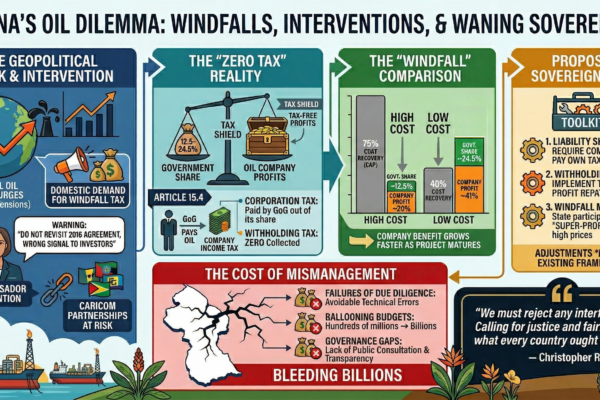
Christopher Ram’s Road to First Oil: Every Man, Woman and Child must become oil-minded Column 180 – Of Windfalls, Unwelcome Interventions and Waning Sovereignty With President Trump’s Israeli-led War on Iran triggering a dramatic rise in oil price, there have been calls for a windfall tax on the American led consortium that owns the hugely…
Did a shell game help bury Petrotrin?
By Anthony Paul, Senior Energy and Strategy Advisor and former Director of Geology and Geophysics at the Trinidad and Tobago Ministry of Energy. The editor created these infographics for understanding, but Anthony Paul has not validated them. They may lack technical precision, but they remain a useful resource for general readers. Were billions in State petroleum…
The never-ending saga of the Gas-to-Energy Project: Of Promise, Planning and a Bleeding of Billions
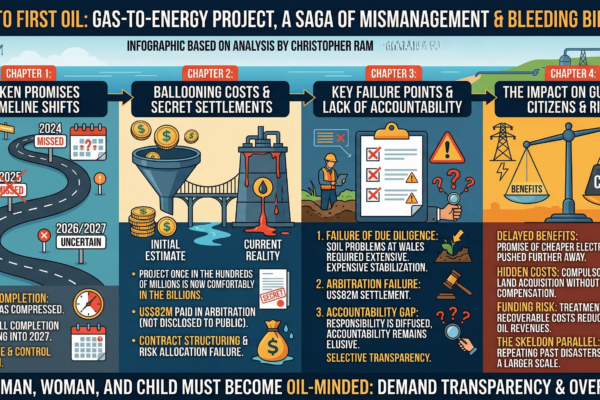
Column 178 dated 3 April 2026 The report of a quiet settlement – some US$82 million paid following arbitration in the Gas-to-Energy Project – ought to give the country pause. Not because disputes arise in projects of this scale – they do – but because of how early, how quietly, and how expensively this one…
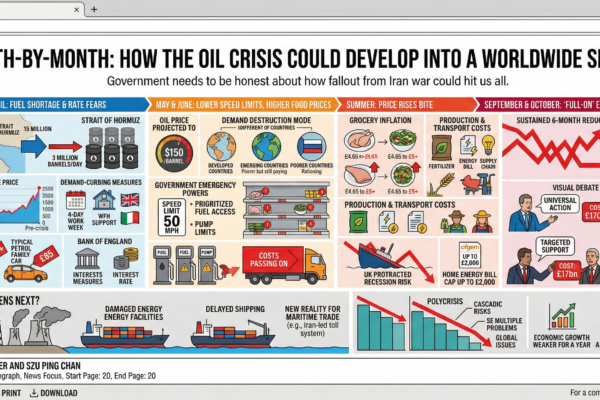
Oil Crisis Effect Going Forward
Global Oil Crisis: Timeline of a Slump The Domino Effect Tracking the global slump from the Strait of Hormuz closure 1 2 3 4 March & April May & June Summer Sept & Oct Supply Deficit 3M Barrels/Day Oil Price (Brent Crude) $110 / Barrel Societal & Economic Impacts
Question for the Minister of Natural Resources
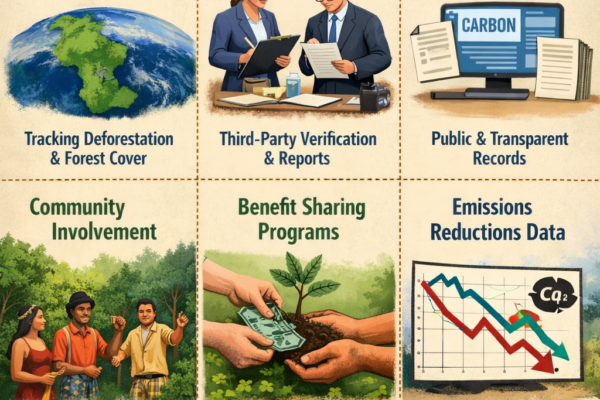
On 19 March, Kaieteur News carried a Department for Public Information report that Guyana has again sold jurisdictional forest-based carbon credits (https://kaieteurnewsonline.com/2026/03/19/guyana-sold-carbon-credits-to-19-airlines-under-lcds-framework/). No price has been reported, nor any transactional costs which must be carried by Guyana for the entity, which makes the estimate of how many carbon credits are available for what period, or for an independent…
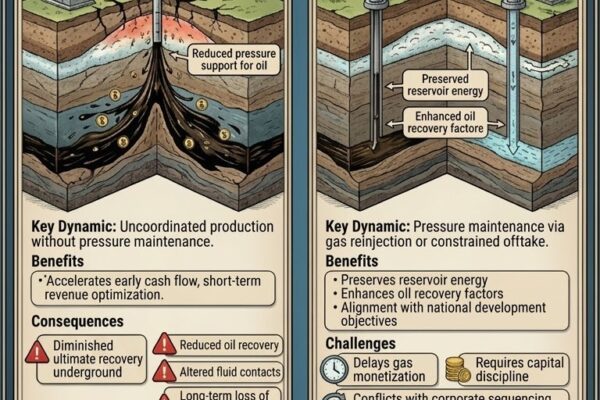
Guyana Gas Development Policy: The Critical Importance of a Technical & Commercial Base
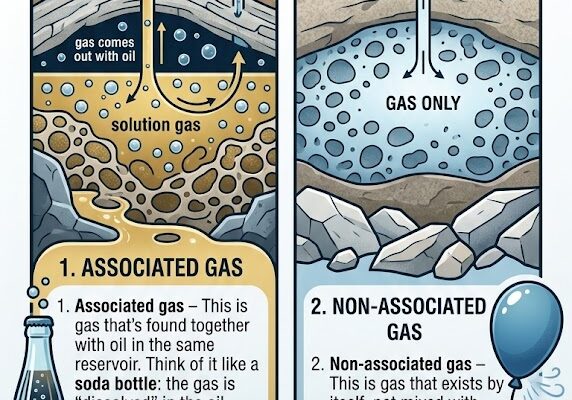
By Anthony Paul, Senior Energy and Strategy Advisor and former Director of Geology and Geophysics at the Trinidad and Tobago Ministry of Energy. The editor created these infographics for understanding, but Anthony Paul has not validated them. They may lack technical precision, but they remain a useful resource for general readers. Throughout this series, my intention…
Guyana Gas policy – technical considerations
By Anthony Paul, Senior Energy and Strategy Advisor and former Director of Geology and Geophysics at the Trinidad and Tobago Ministry of Energy. The editor created these infographics for understanding, but Anthony Paul has not validated them. They may lack technical precision, but they remain a useful resource for general readers. Natural Gas Can Be Found…
Unravelling the Govt-created mystery of Guyana’s Oil Reserves
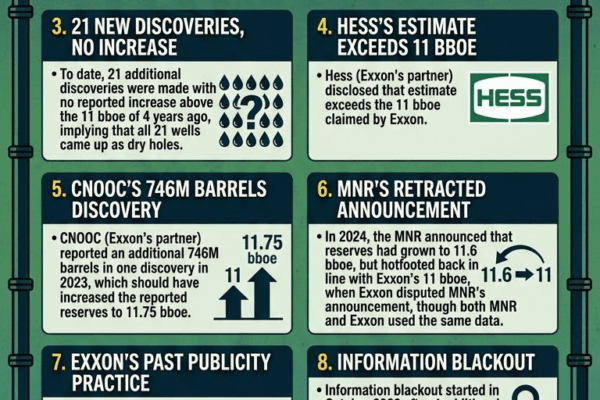
I didn’t know whether to laugh or cry upon reading the Govt’s recent response to a Kaieteur News (KN) question concerning Guyana’s oil reserves – a subject the Govt has turned into a mystery, if not their privileged information. In other words, screw the people of Guyana who owns the oil! Govt elitists still can’t…
What does Guyana gain from the buying and selling of petroleum concessions? A big fat gander egg
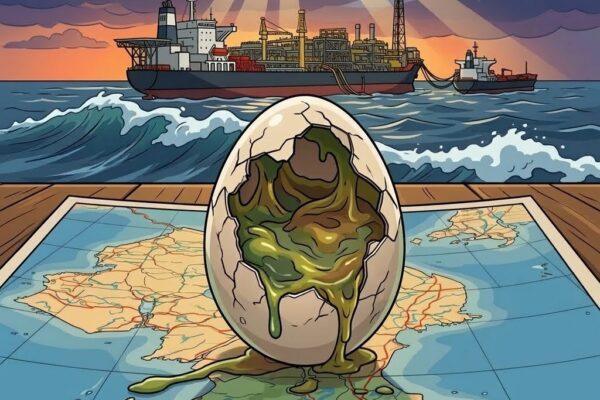
ExxonMobil has concentrated on its ‘golden lane’ of wells drilled in the southeastern part of the huge Stabroek Tract (Block) concession, now of 2.68 million hectares. Exxon has also had a brief look at deeper concessions (Kaieteur Tract) and shallower areas (Canje Tract, formerly part of the original Stabroek Tract of 600 graticular blocks in…