



Dr Gampat is raising very important issues in his letter, SN 2025-06-04, related to the adequacy of financing of Guyana’s economic development thrust through the Central Government Budgetary revenues and expenditures. He also noted the dual nature of the economy, namely, oil and non-oil. He argues for the use of Guyana’s non-oil Gross Domestic Product as the true indicator of the workings of the Guyana economy. I agree.
Regarding Guyana’s oil economy, oil extraction / production and sales sector is an external accounting entity that generates the National Resource Funds, which are withdrawn for Budgetary spending, in a merged current plus capital budget, since the late sixties.
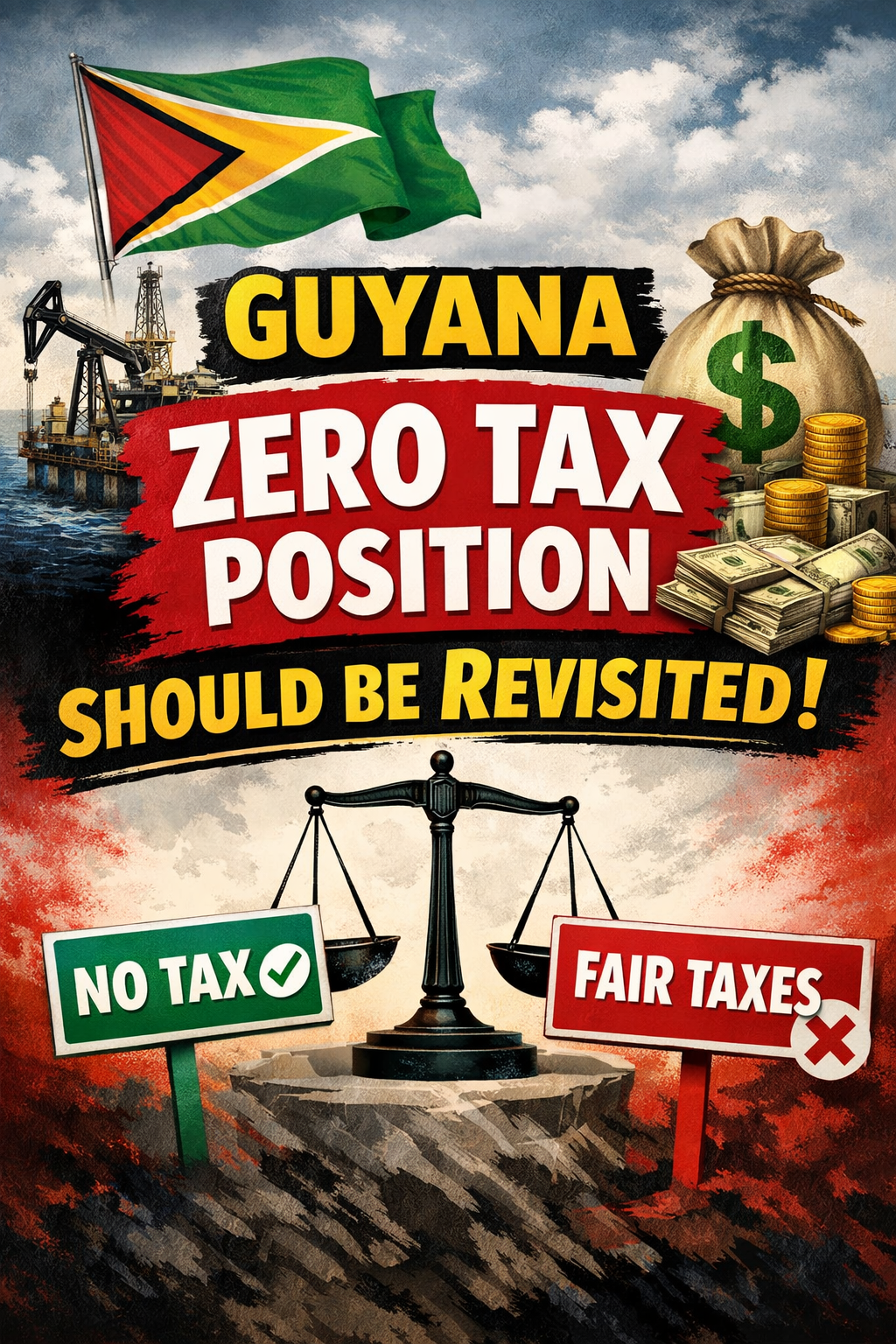
Budgetary spending is supported by five revenue streams, namely tax revenue, non-tax revenue, and three other revenue streams for funding capital spending: the National Resource Fund Withdrawals, NRF, GRIF funds, and Carbon Credit Inflows. For 2024, the tax revenue was G$420,180 and the non-tax revenue was G$17,482, totalling G$437,662 yielded from Guyana’s economy.
The Central Government’s current spending on wages and salaries plus materials were G$500,724 plus debt interest, totaling G$517,683 in 2024. (All values are measured in G$ millions).
Is Dr. Gampat’s observation alarming? Quote: ‘On the other hand, it may indicate a poorly managed economy on the verge of going broke as is the case of the relative weight of tax revenue’.
The key question is whether the current tax plus non-tax revenue supports the current account spending? The gap in current expenditures over current revenues could be made good through internal borrowing. In 2024, the gap, G$517,683 minus G$437,662 or G$80,021 could easily be funded and is not alarming. However, Government sector internal borrowing totaled G$283,771 (see page 31 in Bank of Guyana Annual Report, 2024). Internal borrowing as a percentage of non-oil GDP is 15.8 percent.
The further issue raised by Dr. Gampat is whether oil versus non-oil GDP is the appropriate scaling indicator for alerting the authorities on current spending. In 2024 the oil plus non-oil GDP totalled G$5,141,335. The gap G$80,021 divided by G$5,141,335 is a tiny 1.6%. With only the non-oil economy, the gap to non-oil GDP is G$80,021 divided by G$1,793,717 is 4.5%; not alarming, given the average global inflation rate for 2024 at 5.7% (BoG Annual Report 2024).
The non-oil GDP helps to raise a red flag. With the reported domestic borrowing of G$283,771 the ratio jumps from 4.5% to 15.8%, showing more red flags on current spending levels through domestic borrowing. Non-oil GDP is indeed a more sensitive scaling indicator than the overall GDP (oil plus non-oil).
Sincerely,
Ganga Persad Ramdas