



Thinking taxes, especially removing a part of Government tax base should be approached with caution as Christopher Ram alluded to in SN-2025-12-22. In a fast growing economy the tax base should also be growing, in order to cater to Government social safety net spending in an environment of rising prices that the poor faces. An elimination of the property tax would set budgetary limits on social spending – transfers to those at the lower end of the income ladder and less subsidies on education and health spending. Cash grants would also be limited.
The tax burden on public sector wages is more likely with a smaller revenue tax base; wage increases would be restrained and some individuals, especially professionals, such as doctors and nurses in the public sector are more likely to move over to private sector jobs or emigrate, as labour-leisure choices are impacted on.
A solution to negative effects on labour market choices is to examine the components of the property tax, namely land, buildings, and other structures, such as warehouses and factory spaces. A tax on land only, is more likely to avoid land speculation, while mobilizing idle land for development to take place. A tax on new construction could be eliminated.
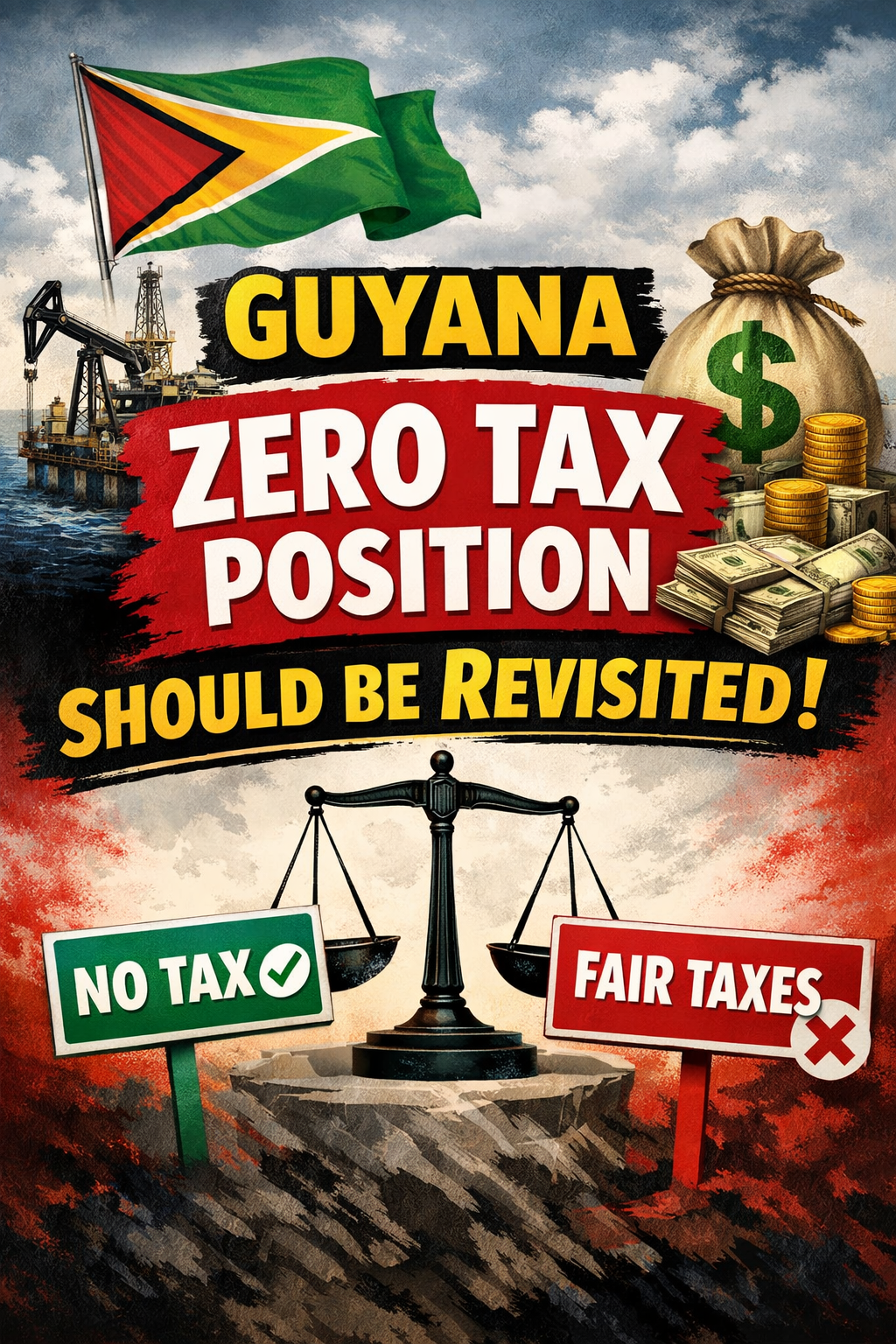
Tax thinking should be mindful of the value components in Government tax base and contracts. A reduced tax base would invite higher levels of government borrowing requirements in a high-growth economy. Higher non-property taxation would be required to service higher debt levels from borrowing. It was no surprise that the authorities had ended up with a distorted Petroleum Sharing Agreement with ExxonMobil, allowing zero profits tax that are actually paid to Government. Zero tax thinking should be revisited.
Sincerely,
Ganga Persad Ramdas